Argentine art master Carlos Alonso dies at 97
 Buenos Aires HeraldUpdated 1 day Ago3 Mins read
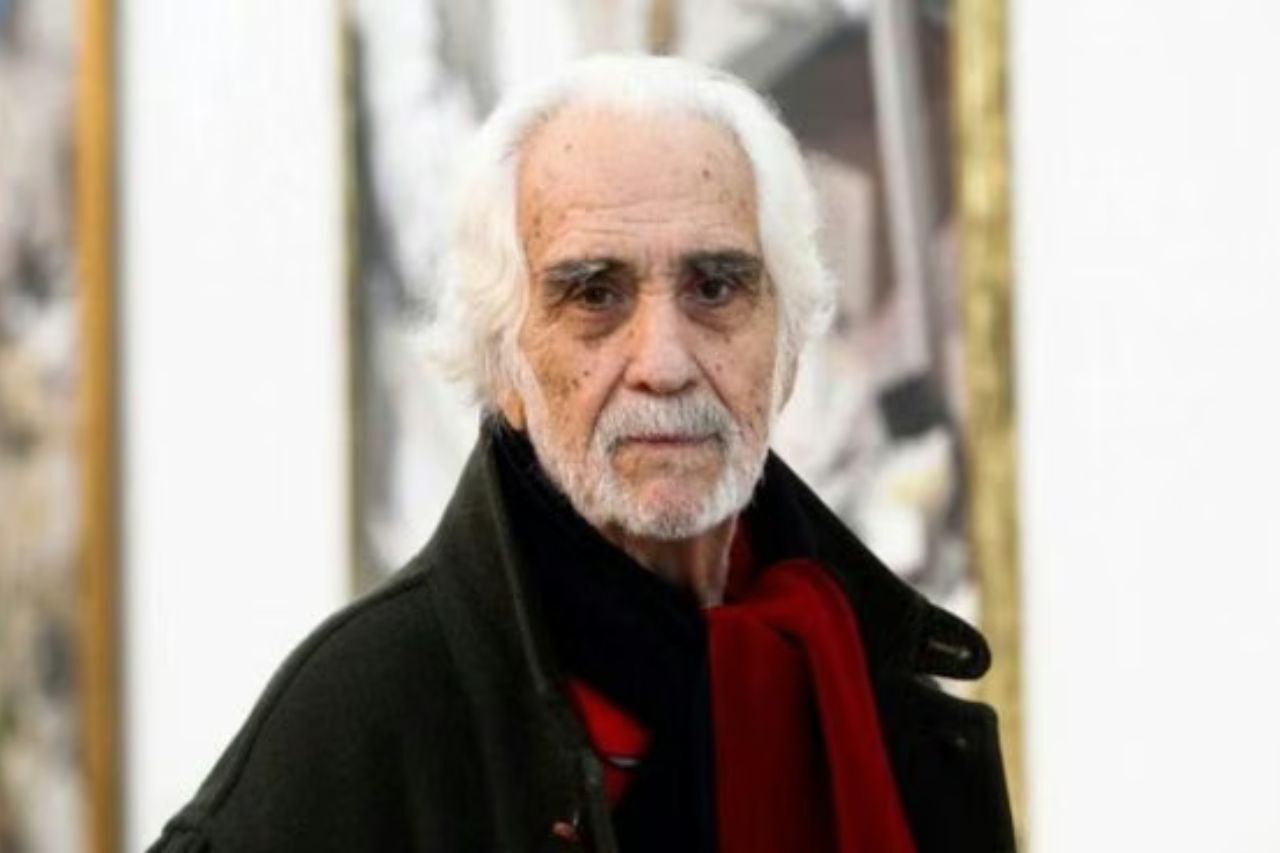

Carlos Alonso, one of the great Argentine painters of the 20th century, died Monday in the province of Córdoba, his family announced in a brief statement on social media. He was 97.
“With deep sorrow, we announce the death of Carlos Alonso. His family bids him farewell with profound grief and gratitude, accompanied by the affection of those who loved and admired him throughout his life. His work and legacy will remain forever,” the family wrote on the artist’s official Instagram account.
Throughout his career, Alonso’s work was marked by themes of historical memory and exile, and by an expressionist technique rooted in his experience as a draftsman and illustrator. It reflected a strong commitment to social issues.
Humberto Carlos Alonso was born Feb. 4, 1929, in Mendoza province. He began studying at the Academy of Fine Arts at the National University of Cuyo in 1944.
Recognition came early. In 1951, he won first prize at the San Rafael Painting Salon in Mendoza, the Salón del Norte in Santiago del Estero and the drawing prize at the Salón del Norte in Tucumán.
In 1953, he exhibited at Buenos Aires’ Viau Gallery, raising enough money to travel abroad the following year and show his work in Paris and Madrid.
After returning to Argentina, Alonso spent a year studying with Lino Spilimbergo in Tucumán and another year in Santiago del Estero. There, he encountered children suffering from hunger and saw poverty and the difficulties of survival firsthand.
The experience transformed his artistic language, he said in a 2018 interview.
“I believe an artist has a degree of responsibility to the community to which he belongs that language has the ability to communicate,” Alonso said. “I chose the need to reflect what was happening in situations of emergency, in situations of poverty, in situations that did not correspond to the capacity, possibility, image or desire that one had for one’s own country.”
Martín Fierro and Don Quixote In 1957, Alonso won a competition organized by publishing house Emecé to illustrate the second part of Don Quixote. He also illustrated Martín Fierro in 1959, and two years later received the Chantal Prize from the Buenos Aires Watercolorists and Engravers Salon.
In 1963, postcards featuring his Don Quixote images were published in the Soviet Union. His illustrations were selected alongside works by Gustave Doré, Honoré Daumier and Pablo Picasso.
Alonso traveled to Florence in 1968 to work on illustrations for The Divine Comedy. A year later, he began Lección de anatomía (The Anatomy Lesson), a series inspired by Rembrandt that also incorporated political events such as the execution of Che Guevara.
The series became an important expression of his work, with the recurring symbiosis of cattle and humans and violence against the body serving as ways to address Argentine reality.
His work was exhibited widely, including at Buenos Aires’ Art Gallery International, where he presented around 250 works related to Dante and The Divine Comedy in 1967. He also exhibited at Mexico’s National Museum of Fine Arts and Cuba’s Museum of Art in Havana, where he presented tapestries and collages. In 1971, he exhibited at the Giulia Gallery in Rome, the Eidos Gallery in Milan and London’s Bedford Gallery.
On April 26, 1976, one month after Argentina’s military coup, Alonso opened “El ganado y lo perdido” (“The Cattle and the Lost”) at the Art Gallery on Florida Street. The exhibition brought together 45 works produced between 1972 and 1976.
The works anticipated the violence that would engulf the country, including images of victims with blindfolded eyes, erased figures and photographs of absent relatives. A bomb threat forced the gallery to be evacuated.
Around the same time, Alonso created Manos anónimas (“Anonymous Hands”), a papier-mâché installation featuring life-size three-dimensional figures, for an exhibit at the National Museum of Fine Arts. The military coup led to the cancellation of the exhibition, and the work was left in Alonso’s studio, where it deteriorated over time. The idea behind it resurfaced in 1981 as a series of paintings and pastel drawings. The original piece was reconstructed in 2019.
Following the disappearance of his daughter Paloma the following year at the hands of the military dictatorship, Alonso went into exile in Italy. In 1979, he moved to Madrid.
He returned to Argentina two years later and settled in Córdoba. From then on, he held numerous exhibitions, including shows at Buenos Aires’ Galería Palatina between 1982 and 1996 and at the National Museum of Fine Arts from 1990 to 1995, as well as at many other Argentine galleries.
Alonso received the Konex Platinum Award twice, in 1982 and 1992, as Argentina’s best draftsman of the decade. In 2012, he received the Konex Special Mention for Visual Arts Achievement for his lifetime of work.
In 2018, he received the National Award for Artistic Achievement at the 107th National Visual Arts Salon.