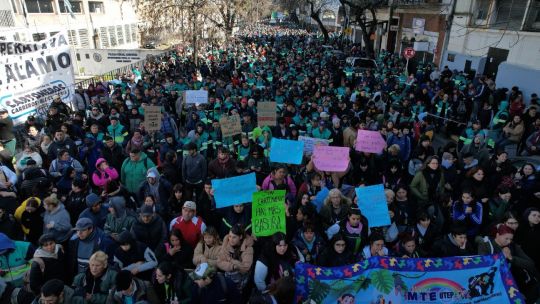
Cooperatives, social groups and cartoneros marched through Buenos Aires City on Wednesday to protest proposed changes to the capital’s waste management and recycling system that they say could put thousands of families at risk.
The demonstration, organised by the Federación Argentina de Cartoneros, Carreros y Recicladores (Argentine Federation of Waste Pickers, Cart Drivers and Recyclers, FACCyR), began at 11am at the intersection of the Belgrano and Jujuy avenues in Balvanera and ended at the Once railway station.
Urban recyclers and demonstrators were protesting changes proposed by the Buenos Aires City Government to the management of dry waste, as authorities prepare to launch a new tender for the service.
Urban recycling in the city is currently organised through 12 cooperatives. Under the proposed new system, the city would be divided into six operating zones, with private companies contracted to provide services including door-to-door collection, the emptying of ‘Green Point’ recycling drop-offs and the processing of recyclable materials at recycling centres.
But cartoneros and cooperatives warn that the changes could undermine the city’s socially inclusive recycling system, which they said involves around 7,000 families and has been developed over more than two decades.
The proposed tender would introduce GPS and telemetry systems to track collection vehicles and monitor their routes in real time.
Cooperatives say the new demands are an attempt to push them out of competition in favour of private firms.
Recyclers receive an income made up of a fixed payment from the City government and a variable amount linked to the materials they collect and sell. In 2025, the fixed payment was 390,000 pesos (around US$260), including travel expenses.
The economic situation has been worsened by the falling value of recyclable materials, including cardboard, the mainstay for many workers.
The protest came as the administrative process to determine the future of the city’s dry-waste management system continued.
For City Hall, bringing in private companies would allow it to introduce newer technology and make waste collection more efficient. For the recyclers, however, the future of thousands of jobs and a model that has nourished impoverished workers for more than 20 years is at stake.
– TIMES/NA/PERFIL