Argentina hits the road to see Pope Leo XIV: packed buses and tight security
 David CorreaUpdated 33 minutes Ago4 Mins read

Thirty-nine years have passed since a pope last set foot on Argentine soil, prompting pilgrims from across the country to travel to the two cities where Leo XIV will meet directly with the faithful: Buenos Aires and Córdoba. Parishes have filled chartered buses, ticket offices at bus terminals have added services and families are pooling money to ensure no one misses the chance to take part in a historic trip.
The pontiff arrived at Buenos Aires’ Jorge Newbery Airport on Sunday afternoon. On Monday, November 9, a national holiday, he held several events in Buenos Aires City, including Mass at the Monumento de los Españoles.
Leo traveled to Córdoba early on Tuesday, where he will celebrate the main Mass at the Argentine Aircraft Factory (FAdeA) grounds, tour the city in the popemobile, visit the archbishop’s residence and meet with clergy at the Cathedral. He will return to Buenos Aires that evening to lead a vigil with young people in Palermo.
On Wednesday, November 11, he will visit a federal prison and conclude his visit to Argentina in Luján.
Córdoba, the country’s pilgrimage hub Most pilgrims traveling from outside the capital have chosen Córdoba because the bus journey is shorter and considerably cheaper than traveling to Retiro, Buenos Aires’ main long-distance bus terminal. This has made the city the preferred destination for worshippers from Argentina’s Northwest (NOA), Cuyo and much of the Northeast (NEA).
Organizers estimate that between 800,000 and one million people will attend the Mass at the FAdeA grounds. The same site hosted Pope John Paul II, who gathered around half a million people there in April 1987.
Córdoba authorities have put in place a large-scale security and logistics operation, designating six official parking areas between four and six kilometers (2.5 to 3.7 miles) from the venue.
The archdiocese arranged free accommodation for around 2,800 people from other provinces, while numerous Córdoba families offered their homes to host priests, catechists and members of religious orders. Hotel operators have reported near-full occupancy.
The North gets on the road More than 250 people from Jujuy traveled in five buses organized by the Cathedral Church. Parish priest Manuel Alfaro said in an interview that they would head straight to FAdeA, arriving in the early hours of Tuesday, before access points close. The buses dropped passengers several kilometers from the venue, leaving them to cover the final stretch on foot. They will begin the return journey on Tuesday afternoon and arrive back in Jujuy early Wednesday.
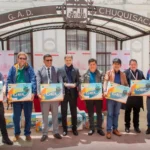
In Salta, the community of Campo Quijano has brought together around 100 worshippers. Father Sergio Chauque said the trip was a collective effort: some children paid for their retired mothers’ tickets, while other families raised money through raffles and empanada sales. The priest believes the visit will help shape the Church’s pastoral direction over the coming years, focusing on three key issues: peace, human dignity and the responsible use of artificial intelligence.
Salta police stepped up road checks in Metán, at the junction of National Routes 9 and 34, as well as in El Tala, along the Las Pavas River and in the rural areas of El Durazno and Saladillo.
In Catamarca, organizers have filled more than two buses, with between 160 and 200 people registered. The trips include transportation, meals and a kit for each pilgrim. In La Rioja, regular bus services for November 7 and 8 sold out, and companies are considering adding vehicles. A discounted round-trip ticket in a semi-bed bus has been priced at 74,000 pesos.
In Tucumán, thousands of residents are also expected to make the journey. An estimated 10,000 people from the province will travel to Córdoba, either in chartered buses organized by delegations or in private vehicles.
Many in the province recalled that in 2004, when he was still known as Robert Prevost, the future pope traveled through the Calchaquí Valleys, visiting Amaicha del Valle, Colalao del Valle and Santa María, the Quilmes ruins and Cafayate, in neighboring Salta Province.
Cuyo, the Litoral and the South Around 7,000 worshippers set off from San Juan, nine out of every 10 of them bound for Córdoba. Four buses departed from the provincial capital’s Cathedral. Father Andrés Riveros said in an interview that the visit was an event for all Argentines, not just Catholics, and urged people to remember that the country does not end in Buenos Aires.
Interestingly, the local bus terminal has not reported a surge in ticket sales, as nearly all pilgrims travel on chartered coaches. Some travel agencies have put together packages costing around 350,000 pesos, including accommodation in Villa Carlos Paz and a stop in Cura Brochero. Some companies filled all their seats in just two weeks, back in August. In Mendoza, inquiries exceeded all expectations, forcing bus operators to add services to Córdoba.
In Resistencia, ticket sales have risen by between 50% and 60%. Córdoba has emerged as the preferred destination for people from Chaco, although some will travel first to Buenos Aires before continuing on to the central Argentine city. In Entre Ríos, parishes in Paraná, Cerrito and María Grande have filled four buses and opened waiting lists.
In Misiones, the Youth Ministry of the Diocese of Oberá organized two groups to travel by bus. Group coordinator Daiana Zerbin stressed that the trip was religious, not political, and said she hoped the pope’s message of peace would help bring together people with differing views.
Chubut will also send a delegation, with worshippers from the dioceses of Comodoro Rivadavia, Esquel and Rawson. The provincial government has provided buses, while local residents and institutions have contributed to reduce costs. At the Sacred Heart of Jesus parish, Father Edgardo admitted he was struggling to put his feelings into words and said the goal was to return home with renewed faith.
Anabela Basílico, who is accompanying the young pilgrims, will be seeing her second pope. She was 18 when she saw John Paul II during his 1987 visit to Argentina.
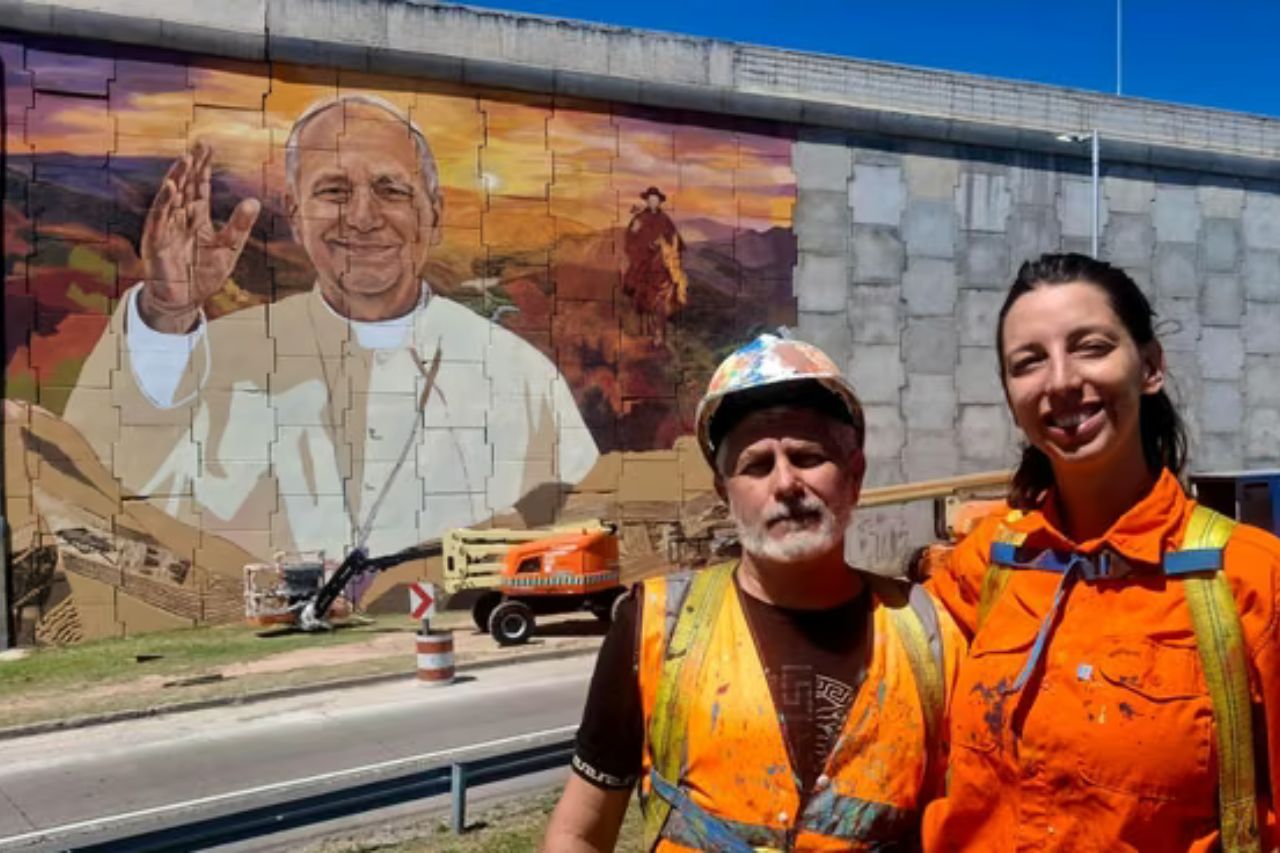
Photo: In Córdoba, Jael Airasca and Ariel Ocampo painted the largest mural of Pope Leo XIV, located in the Tropezón neighborhood along the route the Vatican’s official delegation will take.