From Milei to labor unions, who will try to get their message to the pope
 Veronica SminkUpdated 2 days Ago5 Mins read
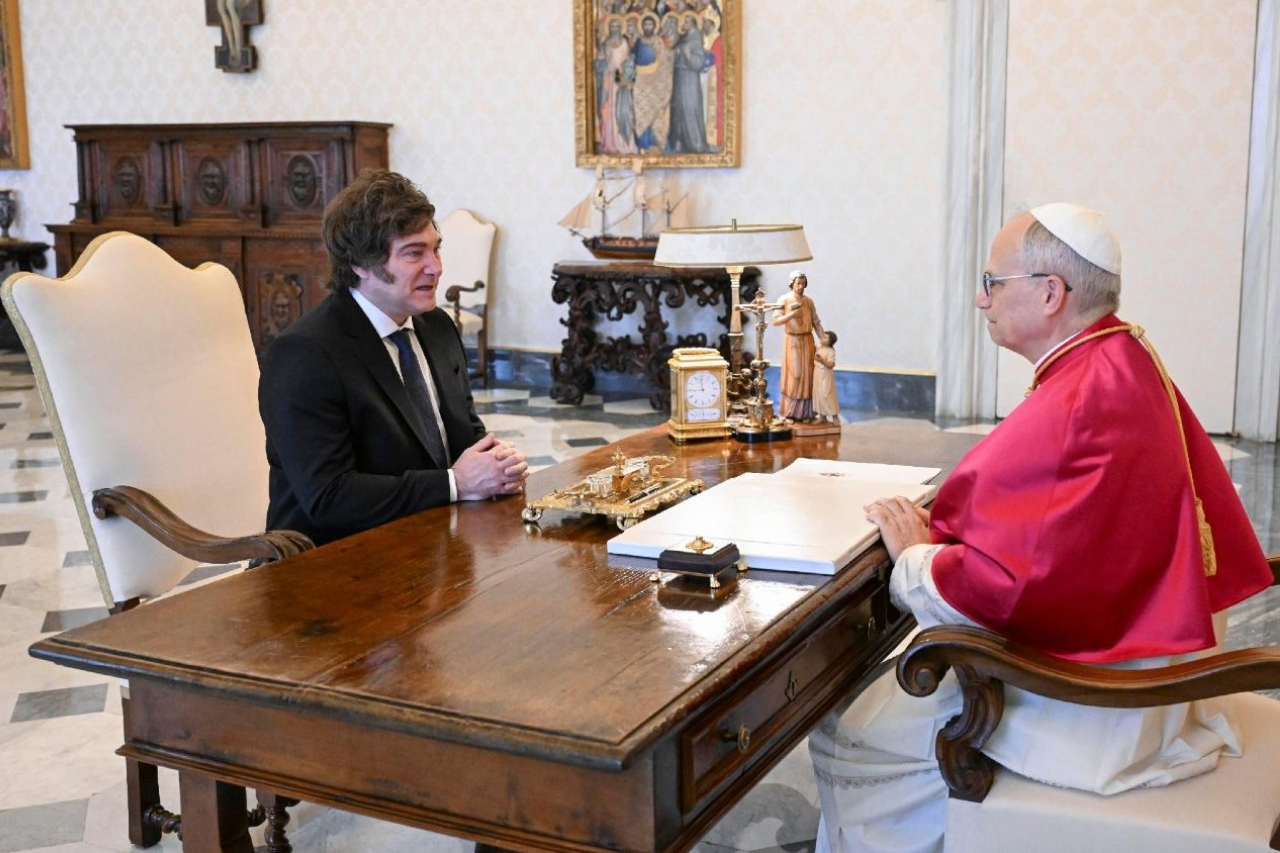

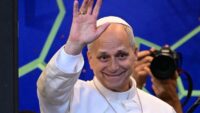
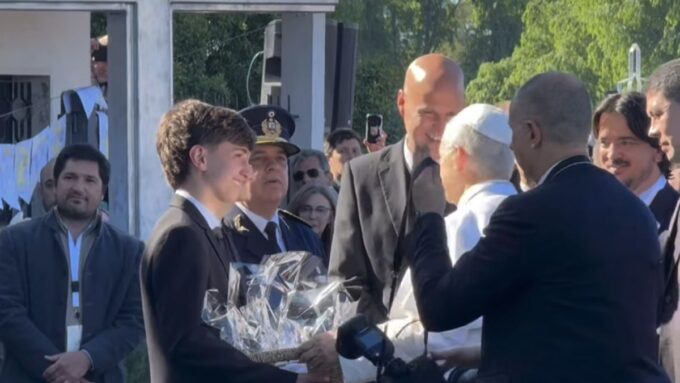
President Javier Milei will be the first Argentine political leader to meet Pope Leo XIV shortly after his arrival in the afternoon of Sunday, November 8, but he won’t be the only one trying to catch the ear of the Holy Father during his 4-day stay.
The private audience at the Casa Rosada, part of the diplomatic protocol for papal visits, will give Milei an opportunity to present his government and its economic program directly to the pontiff.
The encounter comes as Milei’s austerity drive, which brought down inflation through spending cuts, faces growing resistance from those hit hardest by his chainsaw measures.
Some of them, who oppose the government, will also seek to share their point of view with the pope, the first leader of the Vatican to visit the country in almost 40 years.
Leo, successor of Argentine pontiff Francis, shares many of his predecessors’ views and has emphasized social justice, the dignity of work and the plight of the poor.
Therefore, during his visit, which ends on Wednesday, he has planned a series of meetings that will allow him to hear from sectors that are critical of the current libertarian economic model.
Opposition and Villarruel Among those who will meet the pontiff are some of Milei’s biggest political rivals, including those who aspire to replace him in next year’s general elections.
In an rare gesture of political cordiality, the government invited opposition figures to the reception that will be held on Sunday, at 6:30 p.m., at the Palacio Libertad, to welcome Leo.
The meeting, which will include government authorities, representatives of civil society and members of the diplomatic corps, is expected to bring together political leaders from across the ideological spectrum.
Although former presidents have been left out of the guest list, the Mayor of Buenos Aires City and all 23 governors have been invited, many of whom are left-wing Peronists from the main opposition party.
The gathering will provide opposition governors an opportunity to bring their concerns directly to Leo, even if the protocol does not guarantee one-to-one conversations.
The guest list also includes Vice President Victoria Villarruel, whose increasingly bitter falling-out with Milei has left her largely excluded from official government activities since late 2024.
Villarruel in 2024 with Archbishop of Buenos Aires Jorge Ignacio García Cuerva. Her presence will be particularly noteworthy given that she remains the president of the Senate and a senior institutional figure despite her political estrangement from the president.
The invitation followed a unanimous Senate declaration urging the government to guarantee an institutional representation of the chamber at the papal reception.
A spokesperson for Villarruel, the government’s most high-profile Catholic, told the Herald that the resolution also sought a private audience between Senate representatives and the pope, but that it has yet to receive a response.
Kicillof Although Buenos Aires Province Governor Axel Kicillof will also not have a private audience with the pope during the official reception, the Peronist leader, seen as a potential rival to Milei in the 2027 presidential race, will have at least two further opportunities to speak with the pontiff.
On Monday morning, he will welcome the pontiff personally as he arrives in Buenos Aires province — home to almost 40% of the country’s population — to visit the Pequeño Cottolengo Don Orione a residential and educational institution in Claypole that provides comprehensive care for people with disabilities.
The visit will also bring Leo into contact with the institution’s residents and staff, whose experiences could offer a first-hand account of the challenges facing people with disabilities and their caregivers, some of those most affected by the government’s spending cuts.
The visit will be politically significant: Kicillof’s administration has sought to emphasize the contrast between its social policies and Milei’s, presenting the Cottolengo visit as an opportunity to highlight the importance of social protection and the state’s role in providing assistance.
The most powerful governor of the country will get a final chance to meet Leo at the Mass he will celebrate on Wednesday — his final day in the country — at 10 a.m., at the Luján Basilica, in northeast Buenos Aires province, home to the Virgin of Luján, the patron saint of Argentina.
Unlike Milei, who did not invite former presidents to welcome Leo, Kicillof invited former Buenos Aires governors to attend the closing Mass, including his predecessor and political rival María Eugenia Vidal from the center-right PRO party.
Also attending will be Sergio Massa, the former economy minister who lost the 2023 runoff to Milei and is also a potential Peronist presidential candidate in 2027.
Unions, industrialists and business leaders Beyond the political establishment, Leo will also have an opportunity to hear firsthand about Argentina’s economic situation from those most directly affected.
On Monday afternoon he will meet representatives of the labor sector at the Catholic University of Argentina (UCA, in Spanish).
The gathering, scheduled for 4:10 p.m., is expected to bring together around 1,000 people from business, trade unions, social movements, universities and other sectors.
Unlike the private meeting with Milei, this will be a collective event, with the pope expected to hear three testimonies before delivering an address.
Union leaders and business representatives have been working on a document outlining their concerns about the country’s economic and social situation, particularly the deterioration of employment and the difficulties facing workers and small and medium-sized businesses.
Among those involved in the report are the General Confederation of Labor (CGT, in Spanish), and the Argentine Confederation of Medium-Sized Enterprises (CAME, in Spanish).
Photo: Télam Their intention is to convey a critical assessment of the economic situation and the social consequences of the government’s policies.
The agricultural sector will also be represented. The four organizations making up the so-called Liaison Committee — the Argentine Rural Society, Argentine Rural Confederations, Argentine Agrarian Federation and Coninagro — have confirmed their participation.
The broader business community will be represented by the Group of Six (G6), which bring together the country’s main business associations, including the Argentine Industrial Union (UIA, in Spanish), the Argentine Chamber of Commerce and Services, and the Argentine Construction Chamber.
For these groups, the meeting offers an opportunity to discuss not only the effects of the government’s economic adjustment but also the challenges of rebuilding employment, production and economic growth.
The Church’s own message The pope will also spend considerable time with Argentina’s religious leadership. On Monday evening, after the event at the UCA, he will meet leaders of Christian communities and other religious traditions at the Palacio San Martín before attending evening prayers with the Argentine bishops and synodal teams at the Metropolitan Cathedral.
On Tuesday, during his visit to Córdoba province, he will meet bishops, priests, deacons, religious figures, seminarians and pastoral workers at the city’s cathedral.
These encounters will give the local clergy, led by Argentine Episcopal Conference President Marcelo Colombo, an opportunity to convey their assessment of the country’s social situation and the challenges facing the Church.
The Episcopal Conference has played a central role in organizing the visit. It has also emphasized its pastoral nature, seeking to ensure that the pope’s presence is not turned into a political platform.
But with Argentina’s political, economic and social divisions likely to be reflected in the people he encounters, Leo XIV will have no shortage of perspectives to consider before leaving the country on November 11.