IMF backs Milei government measures to boost growth, domestic demand
 Juan Marcos PollioUpdated 2 hours Ago2 Mins read
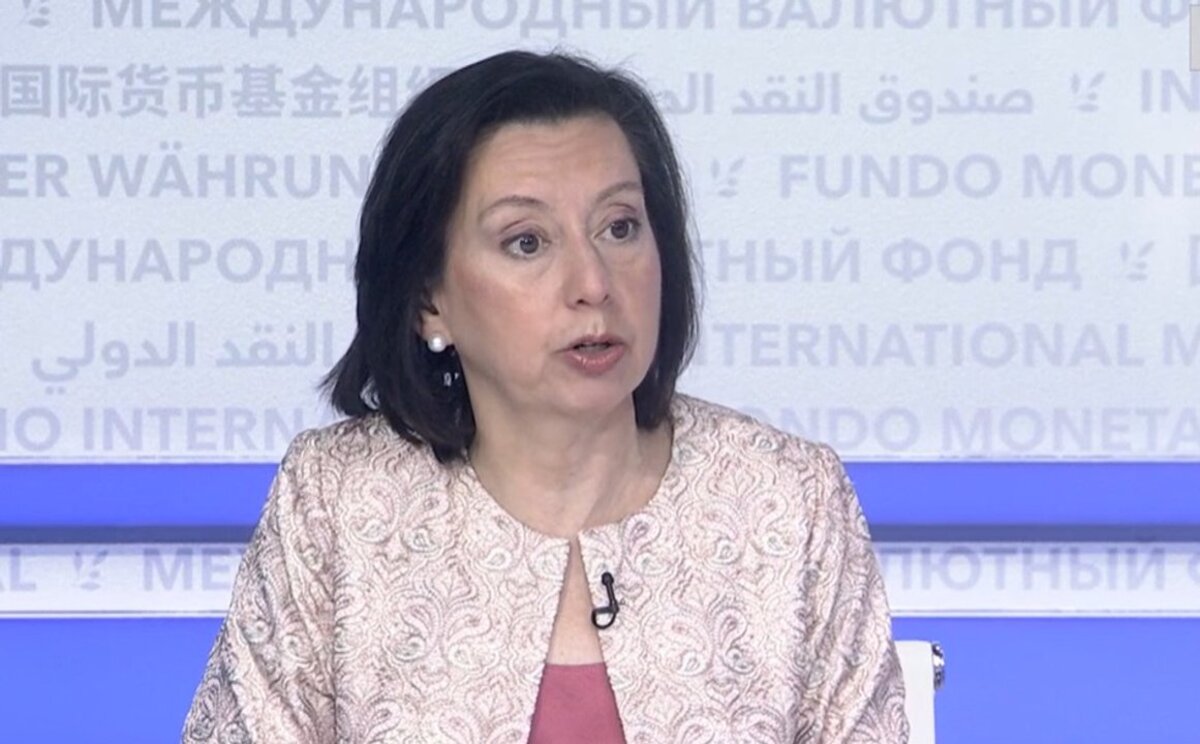

The International Monetary Fund (IMF) has agreed with Javier Milei’s administration on four areas of action to translate macroeconomic stabilization into increased economic activity and job creation.
The announcement was made by IMF spokesperson Julie Kozack at her monthly press briefing on Thursday, just two days after the institution approved the third review of the new agreement signed under Milei’s administration.
The IMF’s Executive Board is expected to grant final approval in early December, unlocking a new US$900 million disbursement under the program agreed upon in April last year, Kozack said.
The IMF has made several disbursements to Argentina since President Javier Milei took office in December 2023. Some are part of the 2018 agreement, while others belong to the program renegotiated in 2025, which included an additional US$20 billion in funding.
In total, the current administration has received just under US$18 billion.
“There was also, in the discussions that our team had with the Argentine authorities, a shared understanding of the need to broaden the stabilization gains that have been achieved so far into stronger growth and job creation,” Kozack said.
On this point, Kozack highlighted four agreed-upon measures aimed at “enhancing growth and broadening the benefits of growth in Argentina’s economy.”
The four measures The first is to deepen Argentina’s capital and mortgage markets. “This is aimed at expanding access to financing, supporting private investment and, more broadly, supporting domestic demand in Argentina,” she emphasized.
The second is to “enhance labor market flexibility” to support private-sector job creation. This, she noted, “will be really important to ensure that the gains of growth translate into jobs.”
The third measure involves moving forward with some of the recently awarded infrastructure concessions,” while the fourth seeks “to facilitate the execution of strategic investments” under the Large Investment Incentive Regime (Régimen de Incentivo a las Grandes Inversiones, or RIGI).
Kozack said the IMF’s “overall message” on Argentina is to stay on course with strong policies while also broadening the gains.
“Continued macroeconomic prudence, together with reforms that are supporting investment financing and job creation, should help Argentina strengthen resilience and achieve stronger and more durable growth over time,” she added.
Concerns over country risk Asked about the rise in Argentina’s country risk, the IMF official said: “I’m not going to speculate about what may happen going forward, but I would say our best advice for Argentina to keep reducing its country risk is to continue with its strong implementation of policies, to continue implementing the program as has been done.”
In this regard, she specifically mentioned “the accumulation of net international reserves and the strengthening of the external position,” which she described as “really fundamental” to reducing the country’s risk premium.
She also stressed that these are all areas to which the authorities are committed.
Argentina’s country risk has climbed from around 400 basis points in July to approximately 740 basis points.
The increase reflects international market volatility, but above all, investors’ concerns about whether Milei’s administration will be able to meet its external debt payments next year.
In 2027, the Milei administration will face debt maturities of nearly US$25 billion. Close to US$12 billion is owed to private bondholders, while US$7.5 billion is due to the IMF.