Chango Spasiuk takes traditional accordion music to new heights
 Marcelo Fernandez BitarUpdated 3 hours Ago4 Mins read
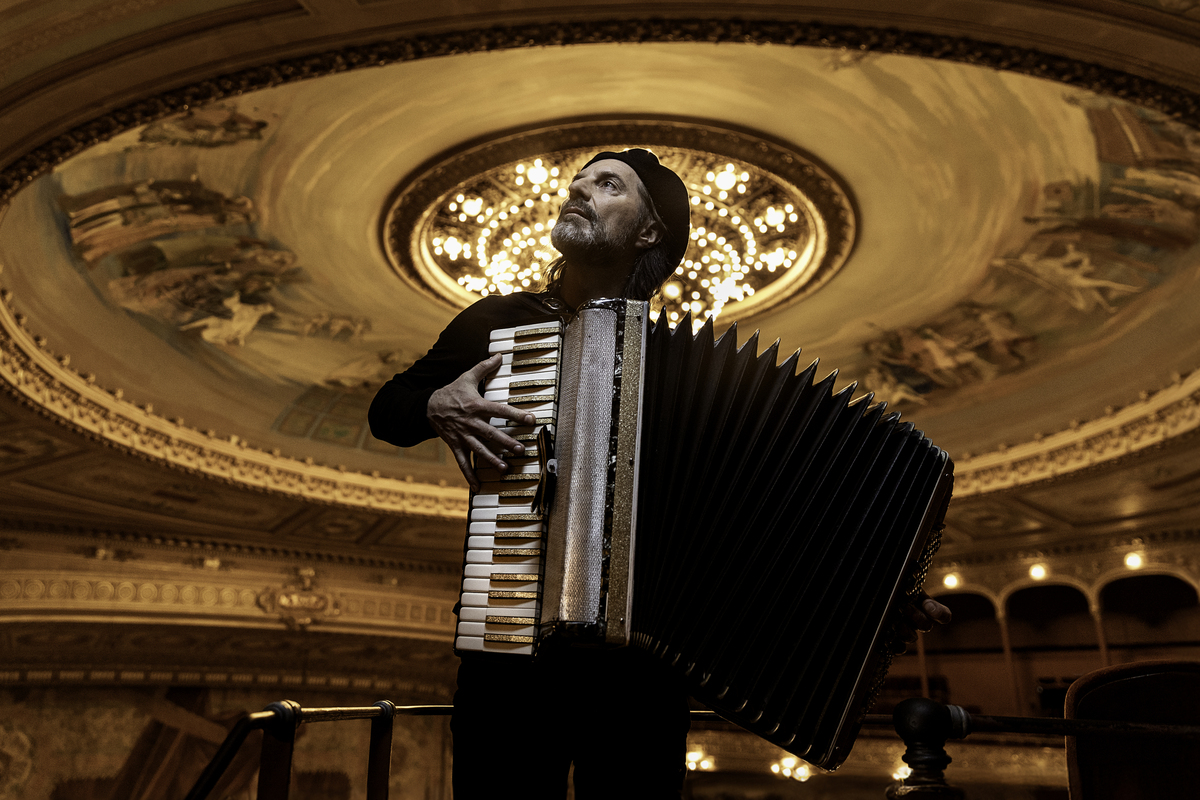

A pioneer in bringing traditional chamamé to global audiences, Argentine accordionist and composer Chango Spasiuk has been dazzling audiences in jazz and world music festivals all around the globe since the early 2000s.
Now 58, Spasiuk is revisiting his career with concerts that showcase the folk rhythms of his hometown of Apóstoles, in Misiones province. In his shows, he effortlessly blends chamamé with tango influences from his beloved Astor Piazzolla, Brazilian notes from Egberto Gismonti, Flamenco atmospheres from Paco de Lucía, and even rock elements from Jimi Hendrix and Argentine rock pioneer Luis Alberto Spinetta.
The accordion’s most widespread use in northeastern Argentina is chamamé, a festive music rooted in the cultural encounter of Guaraní communities and European immigrants. It has a liltting rhythm and a syncopated pulse somewhat similar to zydeco and polka, that invites couples to dance close together. Lyrics usually explore love, heartbreak, homesickness, rural life and local customs.
In 2020, chamamé was inscribed on UNESCO’s Representative List of the Intangible Cultural Heritage of Humanity, recognizing its cultural significance.
Chango Spasiuk emerged from that rich tradition and made his breakthrough at the celebrated Cosquín Festival in 1989.
“I remember meeting Cosquín host Julio Marbiz at the Yerba Mate Festival in Apóstoles and asking him whom I should write to if I wanted to play there,” he tells the Herald. “He gave me the contact information, and I also happened to meet Juan Carlos Saravia of Los Chalchaleros, who invited me to play at Cosquín. There was a kind of synchronicity among all these events.”
“There was also the generosity of comedian Luis Landriscina, who invited me to perform on his television show, which had a huge audience back then. Then came the blessing of Mercedes Sosa calling me to sing with her, perform, and record a song I had composed with Víctor Heredia,” he adds.
Reinterpreting a tradition Suddenly, Spasiuk’s career took off, signing record contracts and playing shows across the country. By the late 1990s, however, chamamé purists began to turn their backs on him, perhaps taken aback by his more evocative instrumental tunes and collaborations with rock bands Divididos and Cienfuegos.
“They heard me play versions of Jimi Hendrix’s ‘Little Wing’ and sent the message that I was entirely expendable,” he says.
In search of new venues, he made his first European tour in 2001, earning rave reviews and invitations to jazz and world-music festivals. “All that traveling enriched me because it helped me grow enormously as an artist, appreciate what I do, and reinterpret my own tradition,” he recalls.
Spasiuk illustrates that period with a memory of his first encounter with Ben Mandelson, who produced his 2004 album “Tarefero de mis pagos” in London.
“He asked me what story I had to tell, because everybody has one. That made me reflect deeply, and it allowed me to reinterpret the backyard where I learned to play the accordion. It put a magnifying glass on all the things I took for granted and helped me define my sound.”
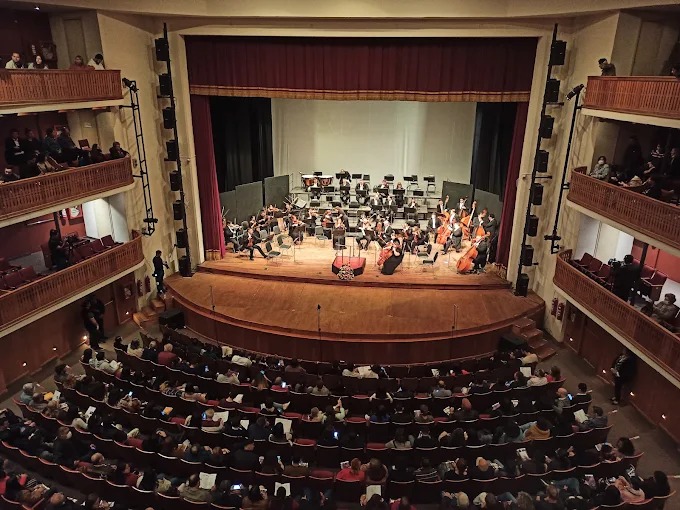
From that point on, he began to play increasingly in a chamber-oriented, acoustic format. He released landmark albums “Pynandí” and “Tierra colorada en el Teatro Colón,” the latter recorded live at Argentina’s most famous opera house.
“It now feels so natural and spontaneous for me to play pieces by Cocomarola, Piazzolla, Tarragó Ros, Luis Alberto Spinetta, and my own songs all in the same concert. There is no great divide between a film score, one composer and another. When you start playing their music on the accordion, everything falls into place and sounds right,” he says.
“It’s a beautiful experience to see how music rooted in an oral tradition can engage in a dialogue with classical orchestras. There’s nothing to explain when I move in the same concert from a string quartet to an accordion trio,” he adds.
Mundo Chango Instead of touring abroad, Spasiuk spent considerable time this year reassessing and restructuring his music, as he prepares for a new phase that he still cannot quite define or describe.
His most important musical statement of 2026 was a sold-out show at Teatro Coliseo in April, titled “Mundo Chango”, which he will present again on November 6, joined by an ensemble of accordions, strings, percussion, piano and voices.
The show also features a rare handcrafted pre-cinematic machine device, built by an Argentine artisan and designed to provide visuals using mechanical parts. With no LED screen, it projects images onto a canvas from behind, offering a fitting metaphor for the analog beauty of his music.
“I feel that I am closing the pages of one book and starting to write a new one, still figuring out where I stand and where I’m headed.
The retrospective feel of the concert was triggered by a painting that depicts a child against a background of the red earth of Misiones. The painting was a gift to Spasiuk from the artist, who also gave him the title of the show when he handed out the present: “This is your world, Chango”.
Pressed to give advice to the young Chango at the start of his career, he would simply tell him not to be afraid.
“Sometimes people hear me speak with a certain confidence, and it might seem as though I’m not fragile or vulnerable, without cracks or weaknesses. But the truth is that I always had plenty of fears. I did everything while absolutely terrified!,” he says.
“As a child, I didn’t believe it was possible to keep moving forward while experiencing a paralyzing fear but somehow things find their place. That’s what I would tell him.”