Eight dictatorship victims identified in Córdoba death camp
 Martina JaureguyUpdated 2 hours Ago2 Mins read

Judicial authorities in Córdoba province announced the identification of eight victims of the military dictatorship whose remains were found at the La Calera military compound, where the clandestine detention center known as La Perla operated between 1976 and 1978.
The Argentine Team of Forensic Anthropology (EAAF, by its Spanish initials) recovered the remains and conducted the anthropological and genetic analyses. The team has been working at the site for more than a year.
So far, the EAAF has identified 38 people buried in the Loma del Torito area of the military compound — 12 in March, 17 in May, and another in late August.
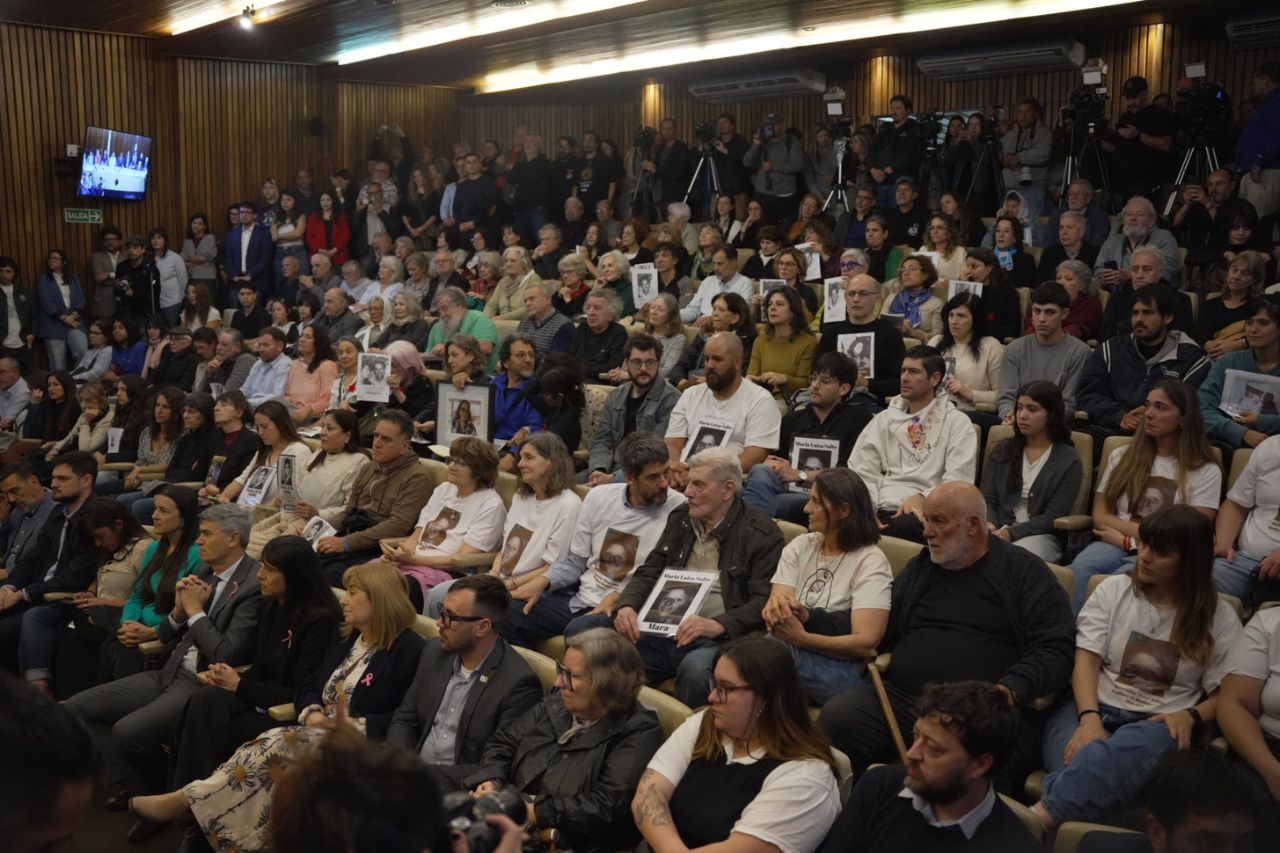
The victims The names were read out by Córdoba Federal Judge Miguel Vaca Narvaja at a press conference attended by EAAF members and representatives of other institutions involved in the process.
The victims’ relatives had been formally notified of the discovery the previous week and also attended the press conference to share their feelings and their families’ stories.
The identified victims are Néstor Albino Acosta, Pascual Delfín Ludueña, Claudio Norberto Nardini, Cecilia Alicia Pessina de Ávila, Mónica Protti de Guillén, Mercedes del Valle Ramírez, María Luisa Salto, and Juan Carlos Soulier.
Until now, they had remained desaparecidos — the term used in Argentina for people who were forcibly disappeared during the 1976-1983 military dictatorship.
The eight victims were kidnapped by the armed forces in 1976 and taken to La Perla, where they were illegally detained and murdered. All had been politically active, participating in unions, social activism, political organizations, or armed groups.
Their remains were found scattered in the dirt at the military field, a sign that mass graves were removed from there.
La Perla was one of the largest clandestine centers of detention, torture, and extermination that operated during the dictatorship. An estimated 2,500 people were held there.
The eight identified victims. Credit: EAAF Reparations “After 50 years, the earth is beginning to give them back to us. These are 38 people whose identities are being returned to their families,” said Sebastián Soulier, son of victim Juan Carlos Soulier, at the press conference. “Finding them is like a comfort to the soul in these difficult times.”
“This is a time when the truth is no longer bound. It is free, and this truth brings us closer to peace, justice, and honoring life,” said Rosa Miriam Ludueña, niece of Pascual Delfín.
Graciela, the sister of Cecilia Pessina de Ávila, said she was shocked to learn that her sister’s remains had been found at La Perla. “I thought Cecilia had been buried somewhere else. Nobody ever saw her in La Perla.”
Graciela said she was moved by the discovery, particularly because the identification was possible thanks to a small bone from her sister’s right hand. “I call it ‘the little bone that speaks.’ This little bone told me that there is evidence that she was kidnapped and murdered. The bone will continue to speak out.”
María Mercedes Salto described her sister, María Luisa Salto, as “a girl with many dreams to accomplish and ideals.” She recalled that her sister had moved to Córdoba from Cipolletti, Río Negro, to study medicine.
“Marita was kidnapped, tortured, disappeared, and she did not die — she was murdered by state terror, by a civic-military dictatorship that did everything possible to cover its tracks.”