Milei touts Argentina’s energy boom, defends investment incentives
 Buenos Aires HeraldUpdated 4 hours Ago3 Mins read
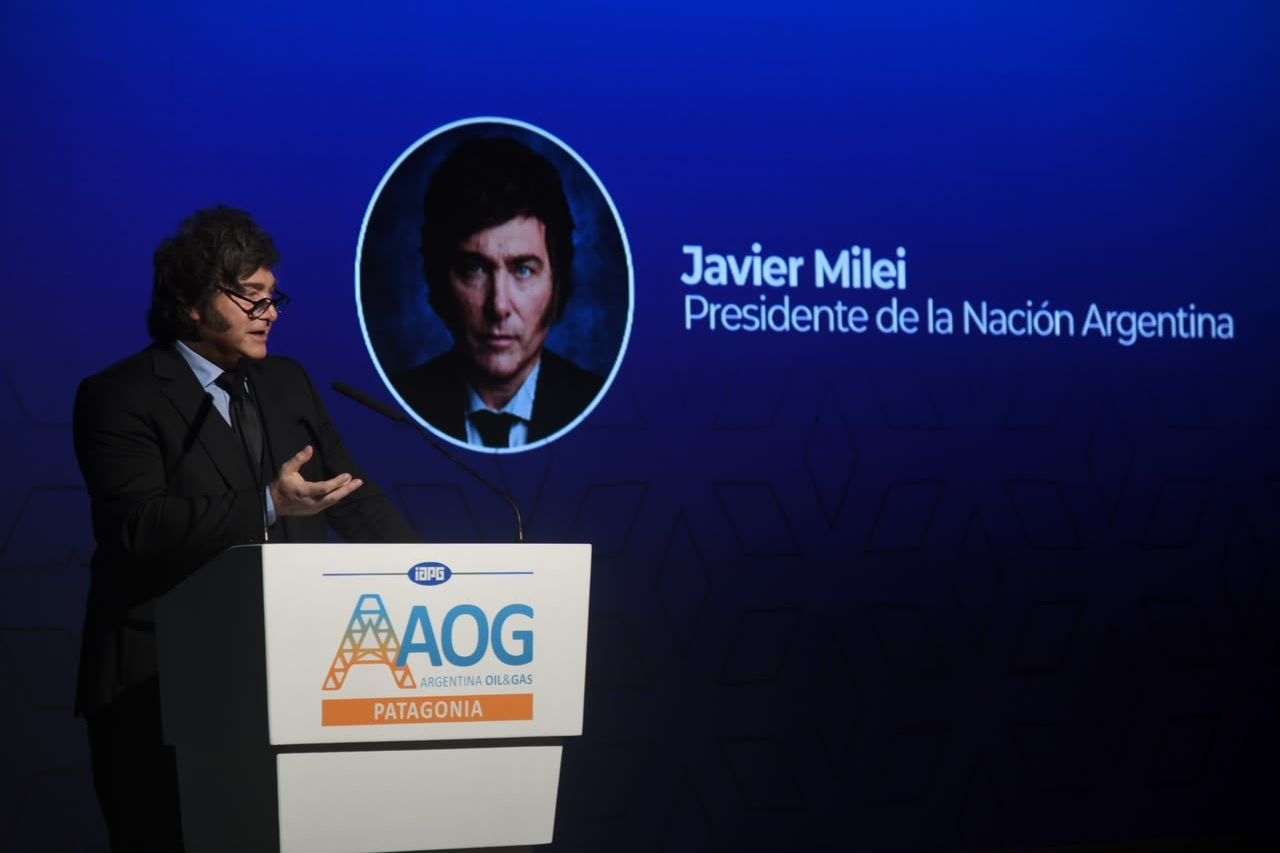

President Javier Milei celebrated Argentina’s record export performance and growing oil and gas production on Monday, crediting his government’s deregulation and investment incentives with transforming the energy sector.
Speaking at the opening of the Argentina Oil & Gas Expo 2026 in Neuquén, Milei said monthly exports had exceeded US$10 billion, a record, and attributed the expansion to changes introduced by his administration.
“For a decade, Vaca Muerta operated at half capacity, with artificially suppressed prices, currency controls and fear of investing. When we changed the rules, in less than three years we started exporting like never before,” he said.
The president argued that Argentina’s natural resources alone could not guarantee prosperity without institutions that encouraged investment and protected private property.
“What changed? Did oil magically appear? No, the formation was always there. What changed were the rules,” he said.
Oil production nears one million barrels a day Milei highlighted the growth of the Vaca Muerta shale formation, where average production rose from about 310,000 barrels a day in 2023 to more than 670,000 in August 2026, according to figures he presented.
National oil production reached 932,000 barrels a day in August, up from approximately 635,000 in 2023. The figure surpassed the previous historical record set in 1998.
“For the first time in history, we are just a few steps away from one million barrels a day,” Milei said.
Oil exports have also increased, from an average 128,000 barrels a day in 2023 to double that volume in 2026. In July, exports approached 330,000 barrels a day.
Milei partly attributed the expansion to the elimination of the so-called barril criollo (creole barrel), a domestic oil price support mechanism that had been in place for over two decades, and was taken down by the government’s initial deregulation measures.
He also pointed to the country’s energy trade balance, which he said had shifted from annual deficits of as much as US$5 billion to a surplus exceeding US$10 billion.
Gas exports and major infrastructure projects Milei described natural gas as another major opportunity, arguing that Argentina was reversing the contradiction of importing liquefied natural gas (LNG) despite possessing the world’s second-largest shale gas reserves.
“For almost 20 years, Argentines bought gas from Bolivia and every winter rushed to buy liquefied natural gas shipments, all while sitting on the planet’s second-largest shale gas reserves. It was like dying of thirst next to a lake,” he said.
The government expects Argentina to begin exporting LNG to Europe next year under a contract worth more than US$7 billion, according to the official account of the speech.
Milei also highlighted the planned Vaca Muerta Oil Sur pipeline (VMOS), an approximately US$3 billion project expected to enable annual exports worth around US$15 billion. He also mentioned the country’s largest private investment: Argentina LNG, a US$51 billion investment project led by state-owned oil company YPF in partnership with Italy’s Eni and the UAE’s XRG.
Milei defends RIGI and hits back at critics The president defended the Large Investment Incentive Regime (RIGI) enabled by his administration, claiming it has drawn more than US$210 billion in announced investment projects, with 45% linked to oil and gas.
He said the program is Argentina’s most important industrial and development policy in history, and rejected economists’ concerns about its potential fiscal cost.
“How can an investment that would never have happened without RIGI have a fiscal cost?” he asked, amid a sputter of insults.
Milei argued that without the regime, many projects would not exist and therefore would generate neither investment — nor tax revenue. He said the incentives also helped rebuild Argentina’s credibility by limiting the state’s ability to reverse the rules governing long-term investments.
“The capital that comes in thanks to RIGI brings projects, jobs and exports that simply did not exist before, and with them, tax revenue that did not exist either,” he said.
He also took aim at critics of his economic program, dismissing arguments that the exchange rate was overvalued by pointing to export growth.
“What kind of overvalued exchange rate is this, in a country where exports are growing five times faster than GDP?” he said.
Milei argued that competitiveness should come from lower taxes, fewer regulations, better infrastructure and reduced domestic costs rather than currency devaluation.
Looking ahead, he predicted that Argentina’s economy would eventually converge toward the investment-friendly framework established by RIGI, presenting the energy boom as evidence that changing the rules could unlock the country’s economic potential.