Brazil elections: Lula da Silva and Flávio Bolsonaro face off in debate
 Martina JaureguyUpdated 3 hours Ago3 Mins read
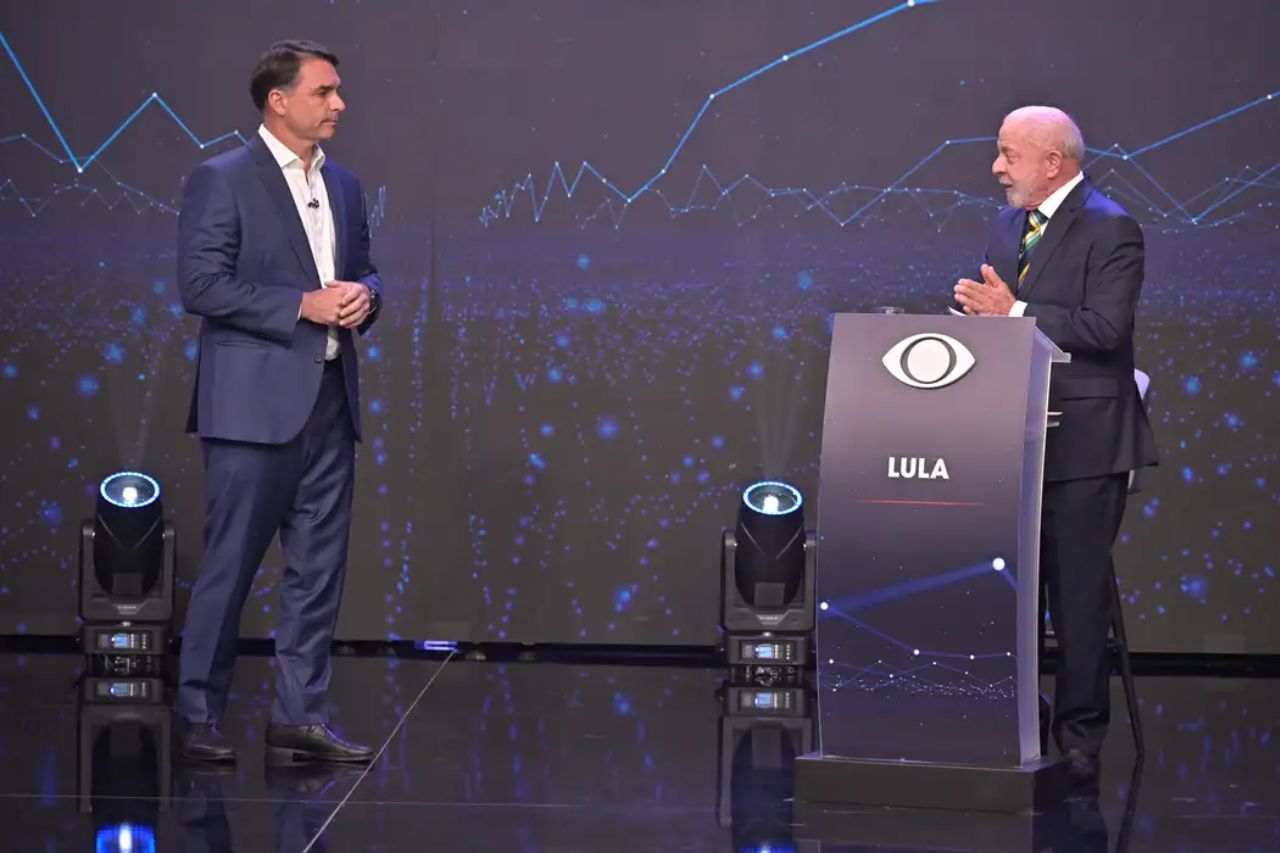

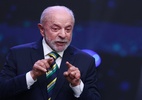
Brazilian President Luiz Inácio “Lula” da Silva and senator Flávio Bolsonaro, son of former President Jair Bolsonaro (2019-2022), faced off for the first time in a heated presidential debate on Sunday night.
The candidates will compete in a runoff next Sunday, October 25, when Brazilians will vote for their next president, who is set to take office in early 2027.
The debate — the first of two, with the second on Friday — was organized by news channel TV Band in São Paulo, and was marked by mutual corruption accusations, discussions of public safety and workers’ rights, and several mentions of Argentine President Javier Milei.
In the first round of elections, on October 4, far-right candidate Bolsonaro (Liberal Party or PL, by its Portuguese initials), secured 47% of the vote, while center-left incumbent Da Silva (Workers’ Party, PT), who is seeking reelection, came in second with 45%.
Ten other candidates took part but garnered few votes in what was a highly polarized race.
A candidate needed at least 50% of the vote to win in the first round.
During Sunday’s debate, both candidates sought to win over voters who sat out the first round while also addressing issues traditionally associated with their opponent.
Supporters of both candidates gathered in São Paulo and Rio de Janeiro ahead of Sunday’s debate.
Proposals Bolsonaro appealed to workers as he explained his change of position on a law backed by Da Silva and the PT, which was recently approved by Congress, that reduced the workweek, guaranteeing two days off instead of just one.
The senator had previously opposed the reform but ultimately voted in favor of it last week. He said he changed his mind after listening to workers’ demands during his travels across Brazil.
“I’m someone who knows how to listen; I’m someone who, if convinced, can change my mind if it’s also better for Brazilian citizens,” he said.
The far-right candidate also proposed a solution to household debt. He said he would create a program to renegotiate debts with discounts of up to 90%, establish a “Ministry of Prosperity” and buy debt from individuals and companies from banks at lower prices, helping bring down interest rates.
Household debt in Brazil has reached historically high levels, affecting nearly 81.7% of families. Lula recently launched his own program, called Desenrola (“Unroll”), to offer discounts and help people reduce their debt.
Lula focused most of his proposals on public safety, one of the main pillars of Bolsonaro’s campaign and an area in which his opponent has criticized his administration.
He said he intends to create a Ministry of Public Safety to improve coordination between the federal government, states and municipalities in the fight against organized crime and militias.
He also defended policies allowing inmates with good behavior to temporarily leave prison to visit their families, responding to Bolsonaro’s criticism.
Heated comments Bolsonaro asked Lula to explain why 73% of inmates had voted for him, prompting a cheeky response from the president: “I want it to be 100%, even your dad!” he said, referring to Jair Bolsonaro, who is serving a 27-year prison sentence under house arrest for plotting a coup and Lula’s assassination, after he lost the 2022 election.
Bolsonaro also brought up Lula’s 2019 arrest in connection with the Lava Jato case, saying he was “the only one” in the room to have been convicted of corruption. Lula spent nine months in jail before his conviction was annulled by Brazil’s Federal Supreme Court in 2021.
In response, Lula suggested that they publicly display their bank account records. “Let’s see whose family steals,” he said.
Lula also challenged Bolsonaro over his stated intention to follow Argentine President Milei’s economic austerity model. “Have you already asked Milei for his chainsaw?” he asked, also referring to Argentina’s poverty and unemployment levels.
Milei has been publicly supportive of Bolsonaro, even attending the launch of his candidacy in July. Speaking during the launch event, Milei insulted Lula, calling him a ‘thief,’ a ‘former convict’ and a ‘totalitarian.’
The attacks — the first by an Argentine president on Brazilian soil —triggered a diplomatic crisis, with both countries removing their ambassadors.