Brazil 2026 elections: Polls have Bolsonaro up in the runoff. Can Lula still win?
 Martina JaureguyUpdated 2 hours Ago5 Mins read
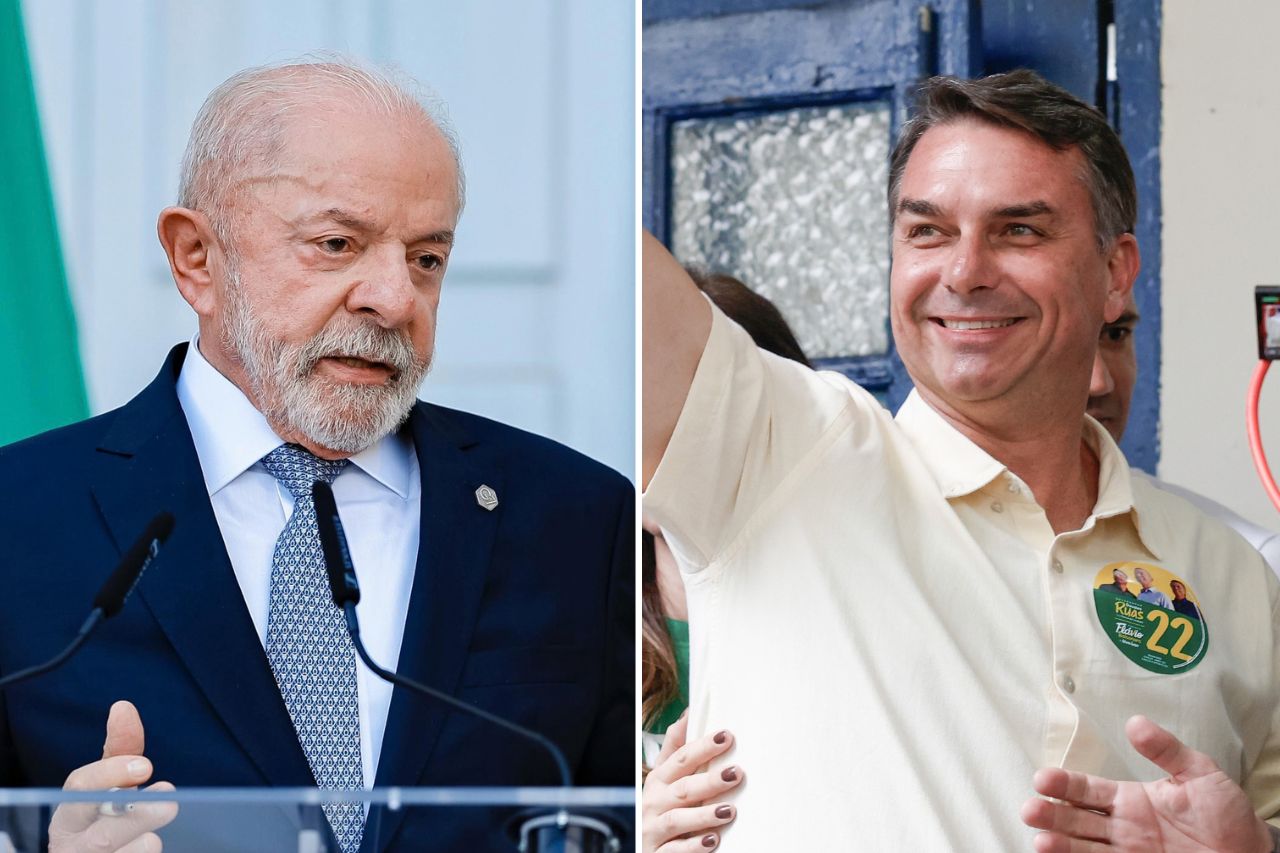

Brazil is headed for a runoff between center-left President Luiz Inácio “Lula” da Silva and far-right senator Flávio Bolsonaro, after the latter took the lead in the first round by nearly two percentage points last Sunday.
Ahead of the vote, most polls had shown Da Silva leading the race, but the incumbent ultimately garnered 45.1% of the vote, while his rival, the eldest son of former President Jair Bolsonaro (2018-2022), got 47% — a strong showing, but not enough to secure the more than 50% needed to win in the first round.
The two candidates will face each other again on October 25.
The first post-election survey, published by polling agency Datafolha, shows Bolsonaro ahead in the runoff, with 49% of vote intention against 45% for Lula.
Three Brazilian analysts spoke with the Herald to break down the election results and discuss what they could mean for the candidates and the country as a whole.
A surprise “Flávio Bolsonaro’s victory in the first round was a huge surprise,” said political analyst Creomar De Souza, CEO and founder of consulting firm Dharma Political Risk and Strategy.
“The prevailing belief here was that Lula would be the winner,” he said, citing the numerous polls that had pointed to that outcome.
Political scientist Cláudio Couto, a professor at the Fundação Getulio Vargas Business School, told the Herald what surprised him wasn’t that Bolsonaro came ahead, but rather the unexpected “massive victory” of his Liberal Party (PL, by its Portuguese initials) in congressional and gubernatorial elections.
The party won the most gubernatorial races in the country, with outright victories in five states. That number could rise to seven after runoffs in the states of Amazonas and Rio de Janeiro.
For Paulo Niccoli Ramirez, a political science professor at the Higher School of Advertising and Marketing (ESPM) and the São Paulo School of Sociology and Politics Foundation (FESPSP), Bolsonaro’s win “demonstrates the strength of the Bolsonarists, their use of social media, and their ability to sway voters’ thinking through Instagram, Twitter or Facebook.”
Can Lula turn the election around? Although the gap between Da Silva and Bolsonaro in the first round was less than two percentage points, the analysts believe it will be difficult for the incumbent to reverse those results and win the election.
There is no historical precedent in Brazilian presidential elections for a runner-up in the first round going on to win the runoff.
In addition, votes cast for minor right-wing candidates in the first round will likely go to Bolsonaro in the runoff.
“It is possible that Lula could make a comeback, but it’s very difficult,” Couto said. “It’s not impossible, but it’s not the most likely outcome.”
However, the three analysts agreed that Lula has some opportunities to expand his voter base, mainly by reaching people who did not vote in the first round on October 4.
“There has never been such a narrow margin between the first and the second place. And this gives Lula’s voters hope,” De Souza said.
At least 21% of eligible voters did not cast a ballot. Lula, his supporters and others who are not necessarily left-wing but are concerned about a possible return of the far right to power in Brazil are appealing to abstainers, as well as those who cast blank or null ballots. They are doing so through a widespread social media campaign and word of mouth.
Ramirez pointed out that nearly 37 million Brazilians did not vote in the first election, far more than the 2.3 million-vote gap between the two candidates.
“I get the impression that many people may vote for Lula or choose not to vote for Bolsonaro out of fear of losing social and political rights, especially since Flávio Bolsonaro has threatened to change the constitution,” he said.
He added that although most votes cast for other right-wing candidates would likely go to Bolsonaro, “they don’t even reach 4 million votes combined.”
The prospect of a potentially “extremely dangerous” Bolsonaro government “might transform Lula into a kind of popular leader embodying democratic resistance, and this could be enough for a comeback,” De Souza said.
However, he emphasized that Flávio Bolsonaro remains the favorite ahead of October 25.
Breaking down Bolsonaro’s win Flávio Bolsonaro is the eldest son of former right-wing President Jair Bolsonaro, who is currently serving a 27-year sentence for plotting a coup and the assassination of Lula, following the latter’s triumph in the 2022 presidential election.
At the time, Jair Bolsonaro was president and seeking reelection, but Lula defeated him.
The coup plot aimed to prevent Da Silva from taking office, which he ultimately did in early 2023. Lula had previously served as Brazil’s president from 2003 to 2011 and is now seeking a fourth term. He was unable to run for president in 2018 as he was in prison over corruption charges, which were later dismissed.
Although Flávio Bolsonaro has extensive political experience, he had not been a major figure in national politics until now. The reasons behind his victory are complex.
For Couto, the result can be partly explained by Brazilians’ “dissatisfaction with the government” — 40% consider Da Silva’s administration bad — as well as by an “anti-establishment sentiment” reflected in the results.
Bolsonarists, Couto said, “represent the anti-establishment,” while “Lula is a traditional left-wing politician, a social democrat.” As such, “he is closely identified with the political system,” including Supreme Federal Court Justice Alexandre de Moraes, who is currently under scrutiny over a corruption scandal.
De Souza believes that, in addition to Lula’s declining popularity, Bolsonaro benefited from a campaign strategy aimed at persuading right-leaning voters to back him in the first round, instead of other right-wing candidates.
He explained that many Brazilian voters typically support a less popular candidate in the first round before switching to one of the two finalists in the runoff. This time, right-leaning voters appear to have voted directly for Bolsonaro.
“At the end of the day, Lula didn’t lose any votes. But Flávio has gained votes from people who didn’t reveal this preference in previous polls,” the analyst said.
A far-right Congress Whoever wins the election, starting in February 2027, they will govern with a Congress in which Bolsonaro’s party will hold nearly a quarter of the seats in the Chamber of Deputies and become the largest bloc in the Senate, with a third of the seats.
The PL’s influence will be greater still when its allies and fellow right-wing lawmakers are taken into account, bringing the bloc close to an absolute majority in the upper house.
“This is far more than one might have imagined,” Couto said.
Ramirez warned that such power in Congress would mean that, if Bolsonaro becomes president, “he will be able to push through constitutional changes based on his thoroughly conservative worldview marked by homophobia, racism, and the defense of evangelical values — which also puts other religions and their freedom of expression at risk.”
Bolsonaro announced plans to reform the national constitution on Wednesday, saying that if he wins, he wants to lower the age of criminal responsibility from 18 to 16 and end presidential reelections.
Ramirez said the legislative majority would also allow Bolsonaro to pursue “the reduction or elimination of public funding for science, technology, the public health system, public universities, and social security, along with a greater trend toward the privatization of countless state-owned enterprises.”
A mirror image of Argentina? “Flávio Bolsonaro’s victory would crown the triumph of the far right and pave the way for them to implement all the changes they desire, while the left will be in the minority in the next legislature,” Ramirez said.
Bolsonaro has said that he considers Argentine President Javier Milei, known for his widespread austerity measures to cut down on state spending, as an example to follow.
“If Argentina had a chainsaw, Brazil will have a massive cut in taxes, bureaucracy, and corruption!” he said in June, thanking Milei for his support. He used the word tesouraço, an expression used to represent the action of aggressively cutting things down with scissors, to describe his own version of Milei’s “chainsaw” measures.
This week, Lula made the same comparison in an X post, lamenting the consequences of budget cuts and a growing economic crisis for ordinary Argentines. “There, they promised ‘chainsaw.’ Here, it’s tesouraço. The result is always the same: against the people,” the Brazilian president wrote.
If Lula wins on October 25, the analysts agreed that he would face major difficulties advancing his legislative agenda and could even encounter a situation of ungovernability, as his Workers’ Party (PT, in Portuguese) would hold a minority of seats in Congress.
He could also face the risk of impeachment, they warned.