Argentina on the brink of an energy ‘golden age.’ Can it become a global player?
 Juan Marcos PollioUpdated 2 hours Ago4 Mins read
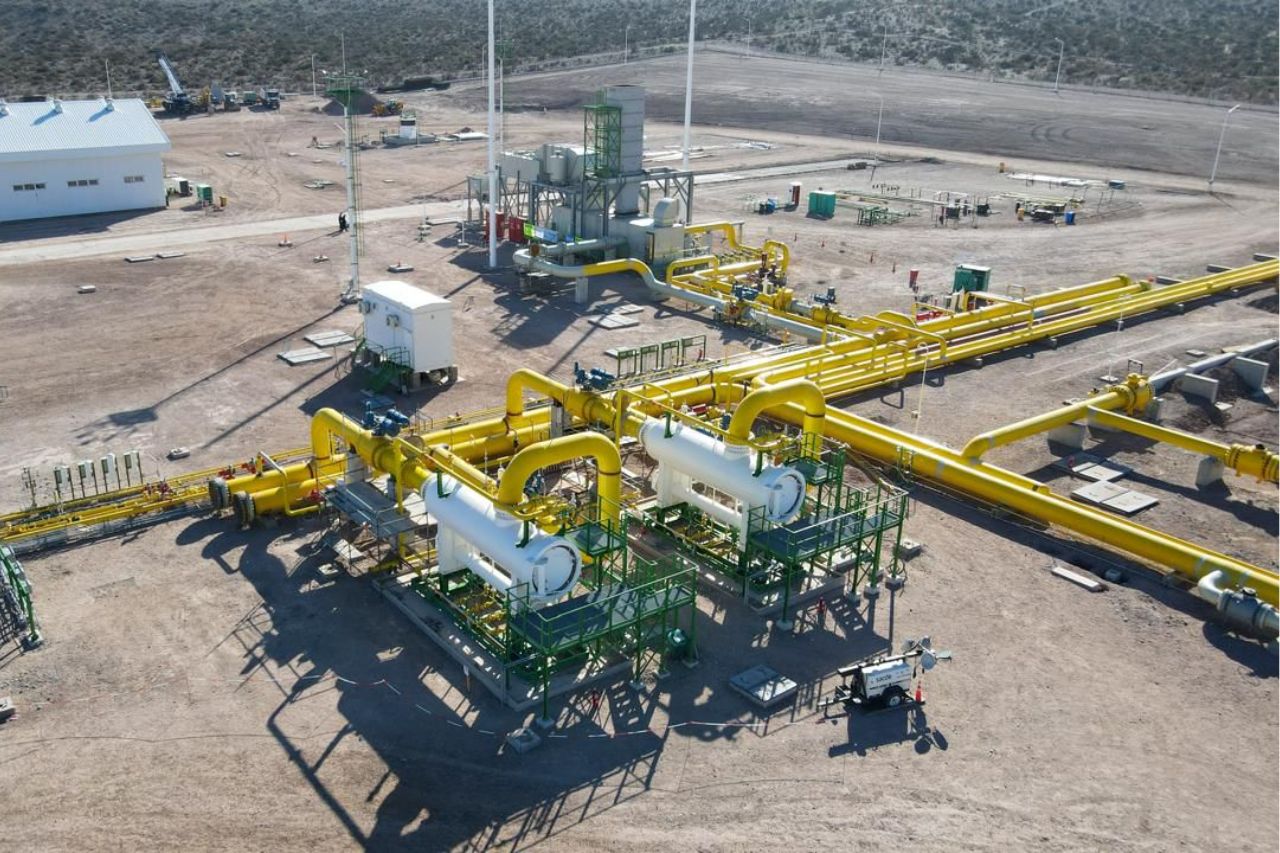

Hydrocarbon production in Argentina began in 1922 with the creation of Yacimientos Petrolíferos Fiscales (in Spanish, YPF), the world’s first state-owned oil company.
More than a 100 years later, the country’s energy sector is primed to enter its best era ever.
“Fifteen years ago, Argentina was a country with oil, and there was not even a possibility that Argentina would be an oil-producing country,” Daniel Dreizzen, head of consulting firm Aleph Energy, told the Herald. Vaca Muerta, he added, open up that possibility.
“Argentina is on its way to becoming an oil-producing country because it is going to export more oil and gas than it consumes itself.”
Although consultants foresee optimistic scenarios for the coming years, they also pointed to a hard ceiling: while the Nequén oil field could certainly make Argentina an important regional actor in the energy sector, it’s not enough to turn the country into a global heavyweight.
How did Argentina get here Argentina’s energy trade balance went from a US$4.3 billion deficit in 2022 to a US$5.6 billion surplus in 2024, the first energy surplus since 2011.
The country is registering record energy exports. Between January and August 2026, the sector accumulated a US$7.8 billion surplus, higher than what was recorded during all of 2025, according to figures from statistics bureau INDEC.
“This is the best moment in Argentina’s oil and gas 100-plus-year history,” said energy consultant Daniel Gerold.
Economía & Energía consulting firm head Nicolás Arceo highlighted that Argentina currently has the “highest production level in its history.”
“It broke the production records of the late 90s and early 2000s in oil and natural gas. And it has a resource development outlook that it has practically never had in Argentine history,” he added.
Production output to grow The outlook for the coming years is even more promising.
If one adds the oil and gas projects already approved under the Large Investment Incentive Regime (RIGI, by its Spanish acronym), the works already underway, and the announced projects, the total investment universe approaches US$90 billion.
The core of the projects is concentrated in the Vaca Muerta oil field in Neuquén province and in projects to export liquefied natural gas (LNG).
Dreizzen explained that Argentina currently produces approximately 900,000 barrels of oil per day, 700,000 of which originate in Vaca Muerta.
“If everything goes well, within 5 years it will reach 2 million barrels per day; that is more than doubling current production,” he estimated.
The director of the energy consultancy Paspartú, Juan José Carbajales, said that by 2032 Argentina could export 1,000,000 barrels of oil per day.
“It is not insignificant because it is the same amount that Venezuela has today,” he noted, adding that not many countries can increase exportable production to that level.
In the case of LNG, the equation is a bit different.
Arceo estimated that if all projects linked to this sector come to fruition, Argentina would have a liquefaction capacity of around 18 MTPA (million tonnes per annum). Carbajales raised the number to 24 MTPA by 2032.
While Argentina does not currently have large-scale gas liquefaction capacity, there are two projects in progress aimed at making that a reality.
The first is Argentina LNG, an estimated total investment of US$51 billion that will install floating liquefied natural gas (FLNG) units off the coast of Río Negro.
YPF CEO Horacio Marín announced at Argentina Week Paris that the final investment decision (FID) will be signed on November 26 together with Italy’s Eni and the Emirati firm XRG.
The second project is led by the company Southern Energy and the SASE consortium, made up of the firms PAE, YPF, Pampa Energía, Harbour Energy, and Golar LNG.
Construction has already begun on the San Matías Pipeline — a 500 km pipeline dedicated exclusively to exports — with the goal of receiving the first liquefaction vessel in the second half of 2027.
That would allow local LNG production to access European and Asian markets.
“All international analysts see Southeast Asia as the growth sector for hydrocarbon demand over the next two or three decades,” Arceo highlighted.
Can Argentina become a global player? While the future of energy production is excellent, the four specialists consulted by the Herald agreed that projected hydrocarbon production would be insufficient to turn Argentina into a heavyweight in the sector, like the United States, Russia, or Arab countries.
“Global oil prices are not going to collapse because Argentina increases its exports like to would if Saudi Arabia were to do so,” Gerold said.
Carbajales said that, while Argentina could become a “respectable player” within the international oil sector, it would “not move the needle.”
Arceo explained that the country could consolidate its position among the top 15 producers globally, representing 1.5% to 2% of global supply, but very far from the United States, Arabia, and other OPEC countries.
Those productions levels are not even enough to become the largest producer in South America.
Brazil produces approximately 4 million barrels, while Guyana — with a current capacity similar to Argentina’s — aims for its oil production to reach 1.7 million barrels per day by 2030.
In LNG, the situation is slightly more favorable. Gerold estimated that Argentina could represent just over 2% of global production.
“By 2032, Argentina will export 18 MTPA of LNG in a market that might be 700 MTPA by then.”
Carbajales is slightly more optimistic, saying Argentina could indeed be a relevant actor, given that there are not many exporters globally.
The country’s relevance, he added, is related not to volume but to the fact it would imply a “new window” for demand from Europe and Asia, allowing them to diversify geopolitical risks.
“That grants Argentina a prominent place at negotiating tables, with a relevant asset that it is already using for its sovereignty claim [over the Malvinas Islands],” he said.
Dreizzen did not rule out that there could be an even greater increase in hydrocarbon production in the coming decades if new deposits are proven in the country.
Among possible developments, Dreizzen pointed to Palermo Aike — south of Santa Cruz province and part of Tierra del Fuego — the D-129 Formation — located between Chubut and Santa Cruz — or potential offshore deposits in the Argentine Sea.
Editorial disclaimer: Although the UK refers to the territory as the “Falkland Islands,” Argentina strongly contests this name. The Buenos Aires Herald uses “Malvinas” to refer to the islands.











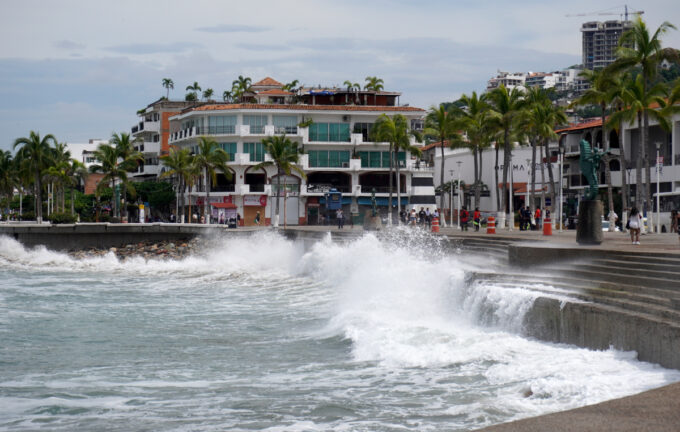
Huracán «Simón» de categoría 4 amenaza costas de México y autoridades suspende actividades en cuatro estados
 Diego Estuardo Guzman1 Mins read