Supreme Court reinstates limits on foreign land ownership
 Buenos Aires HeraldUpdated 4 hours Ago2 Mins read
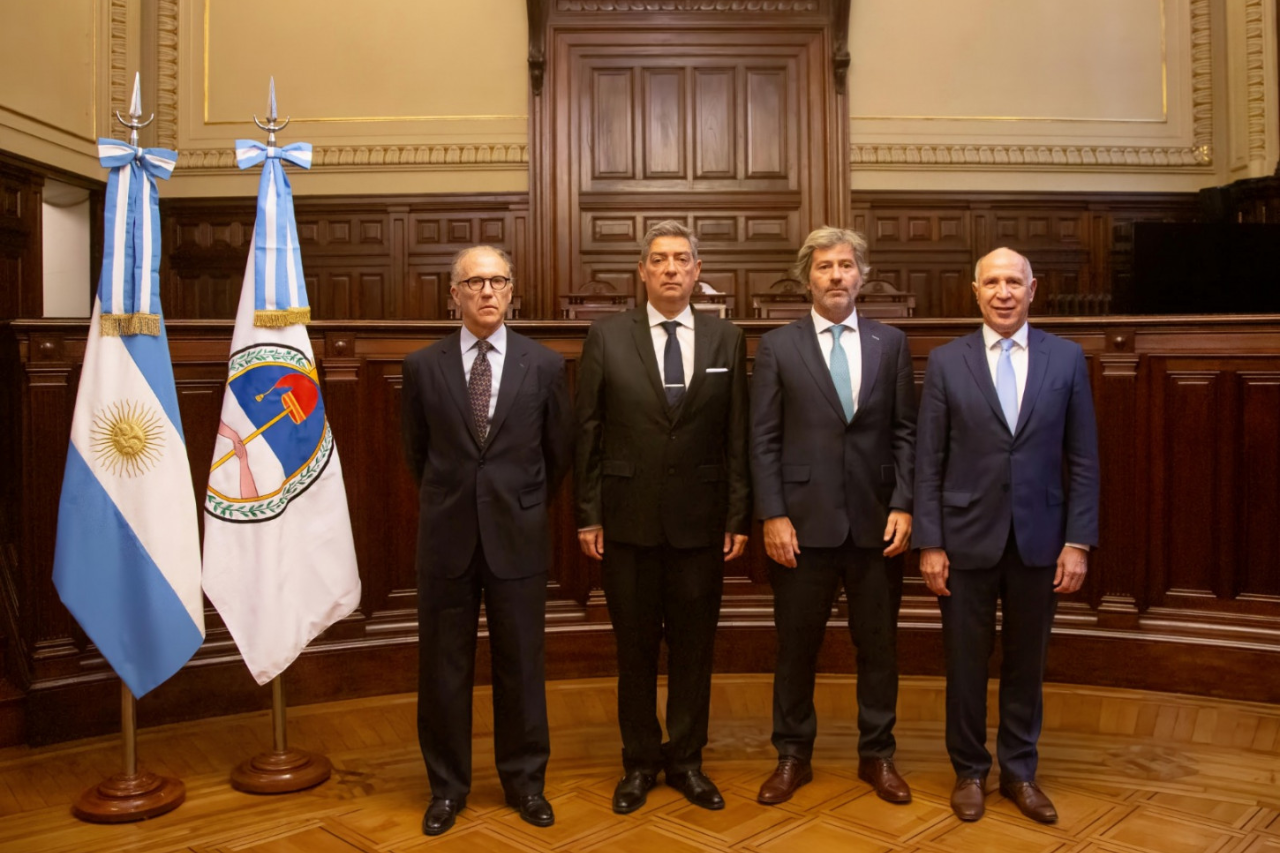

Argentina’s Supreme Court temporarily reinstated restrictions on foreign ownership of rural land by suspending an article in President Javier Milei’s 2023 mega-decree that struck down the Land Law.
The law, which was passed in 2011, caps foreign land ownership at 15%.
The justices’ decision comes 10 days after the same court lifted all limits on the purchase of land by foreigners in a ruling that reinstated the controversial article from Milei’s decree.
That verdict had caused a public outcry, leading opposition lawmakers to propose rejecting the whole decree 70/2023.
The new ruling by the Supreme Court temporarily suspends Article 154 of the decree, reinstating the Land Law (Law 26,737) while a lower court examines a legal challenge to the measure.
The restrictions in the Land Law include a national cap limiting foreign ownership to 15% of all rural land, a 15% limit on ownership by nationals of any single foreign country, and a limit of 1,000 hectares in the core agricultural zone.
The law also restricts foreign ownership of land near major bodies of water and certain border areas.
Milei’s 70/2023 mega decree, which repealed the Land Law, also amended or struck down hundreds of other laws as part of his government’s deregulation program.
Although the Senate rejected the decree in March 2024, a DNU is repealed by Congress only if both the upper and lower houses reject it.
The new ruling The new Supreme Court decision does not settle the underlying dispute over the constitutionality of the repeal.
The case was brought by provincial legislator María Magdalena Odarda, the environmentalist NGO Árbol de Pie (Standing Trees), and representatives of the Indigenous communities Lafkenche and Lof FVTA Anecon.
They seek to have Article 154 declared unconstitutional and void, arguing that repealing the Land Law through an emergency decree threatens environmental protection and the rights of Indigenous communities.
In its majority ruling, the Supreme Court said the unusual procedural history of the case had left the plaintiffs’ requests unanswered.
It said an interim measure was necessary to ensure effective judicial protection and prevent “irreparable harm” while the proceedings returned to the appropriate court.
The justices cited Article 41 of the National Constitution, which establishes “the right to a healthy and balanced environment, as well as the obligation to protect it.”
They also referred to the Escazú Agreement, which guarantees access to justice in environmental matters and recognizes the possibility of interim measures to prevent or mitigate environmental damage.
The court ordered the case returned to the Federal Court in San Carlos de Bariloche, where the judicial process began, which must determine whether the plaintiffs have legal standing and examine their request for an injunction.
Therefore, while the ruling temporarily restores the restrictions, it leaves the broader question of the repeal’s validity unresolved.










Argentina’s Central Bank and auditors clash over gold reserves
Argentina’s National Audit Office (AGN), the public-sector oversight body, has raised questions...
 Juan Marcos Pollio3 Mins read