In 1957, renowned journalist and militant Rodolfo Walsh published Operación Masacre (“Operation Massacre”), revealing the horrors of an execution carried out by police the previous year in José León Suárez, Buenos Aires province.
For 70 years, the massacre remained unpunished.
Operación Masacre would go on to become a landmark of Argentine literature and is widely regarded as the world’s first work of investigative nonfiction.
One of its most famous lines still sends chills down readers’ spines: “Hay un fusilado que vive” — “There is a man who was executed who is still alive.”
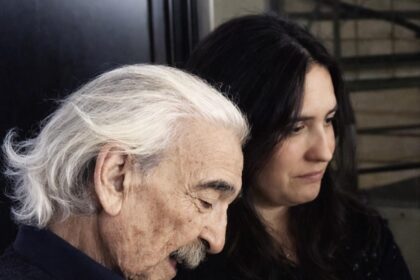
Next week, that survivor, Juan Carlos Livraga, will witness the start of a “truth trial” seeking justice for him and the other victims for the first time. Now 94, he is the only one of the seven survivors of the massacre who is still alive.
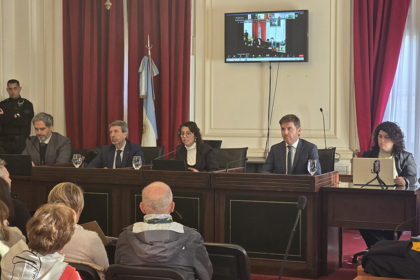
Following an investigation launched in 2022, Federal Judge Alicia Vence of the San Martín federal court has ordered oral proceedings to establish the truth about what became known as the José León Suárez Massacre. The hearings will take place on June 17, 18 and 19.
As none of those accused of carrying out the executions are still alive, the proceedings will take the form of a “truth trial,” meaning no criminal convictions can be handed down.
Instead, the court will examine whether the Argentine state committed crimes against humanity during the operation.
The trial also seeks to provide long-overdue reparation to the victims’ families and Livraga, the sole surviving victim, by establishing an official judicial record of the events after decades of impunity.
What happened
On the night of June 9, 1956, a group of neighbors gathered at an apartment in a working-class neighborhood of Vicente López, north of Buenos Aires City, to listen to a boxing match being broadcast from the iconic Luna Park stadium.
They sat around the radio until late into the evening, when a voice suddenly shouted from outside: “Police!”
At the same time as the boxing match, a political uprising was brewing. The self-styled Revolución Libertadora (Liberating Revolution) — the military dictatorship that had overthrown President Juan Domingo Perón the previous year and forced him into exile — was in power.
A group of Peronist military officers led by General Juan José Valle had launched an uprising against the regime. But the authorities had learned of the plot in advance and crushed it before it could gain momentum, executing Valle and 17 rebel soldiers.
Across the country, supporters were waiting for a revolutionary proclamation to be broadcast over the radio during the boxing match, which would signal the start of the uprising. The message never came: those tasked with transmitting it had already been arrested and would later be executed.
Most of the men gathered around the radio were Peronist sympathizers or opponents of the dictatorship awaiting the signal to act. Others had simply come to listen to the fight.
Shortly before midnight, police arrived at the Vicente López apartment looking for General Raúl Tanco, another leader of the rebellion. He was not there, but officers arrested the men inside.
Among them were Miguel Ángel Giunta, a next-door neighbor; Horacio di Chiano, who owned the apartment; and Juan Carlos Livraga, who had no knowledge of the uprising.
The 12 detainees were taken to a landfill in nearby José León Suárez, where they were shot before dawn by a squad led by San Martín police chief Rodolfo Rodríguez Moreno, acting on orders from Buenos Aires Province Police chief Desiderio Fernández Suárez.
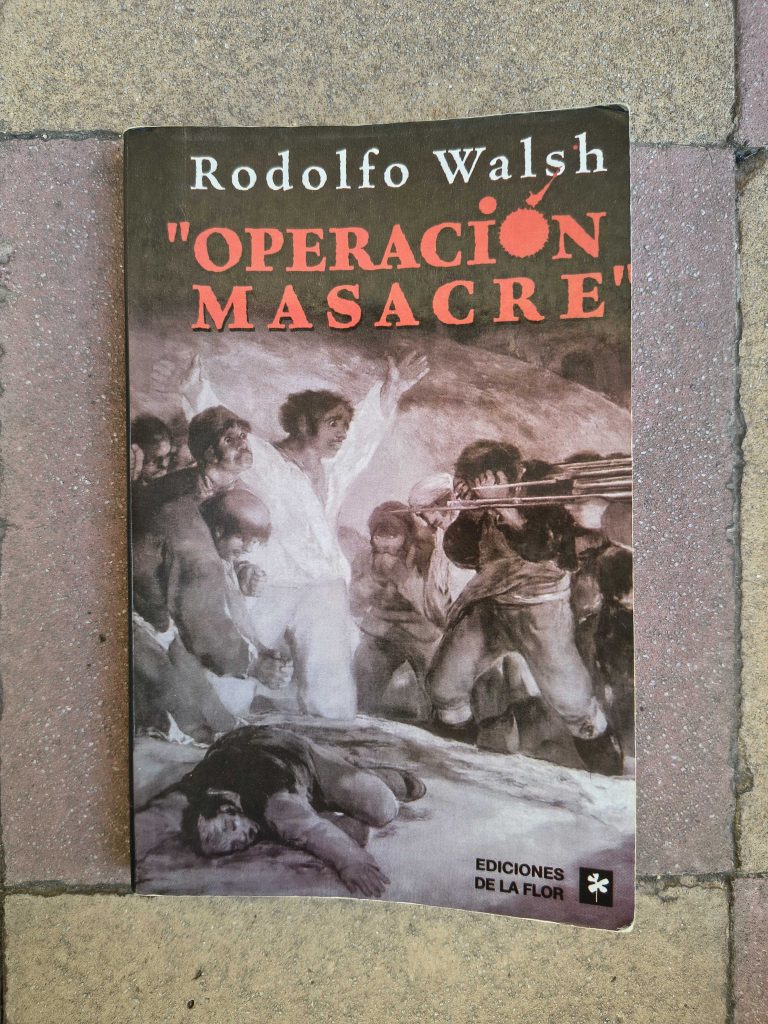
Seven of the 12 men survived and managed to escape. Their arrests had taken place an hour before martial law was declared in the early hours of June 10. In Operación Masacre, Walsh argued that this timing rendered the executions illegal.
“Six months later, on a stifling summer night, over a glass of beer, a man told me: ‘There is a man who was executed who is still alive,’” Walsh wrote in the book’s opening pages.
The revelation prompted the then little-known journalist to launch an exhaustive investigation into the executions, relying heavily on testimony from the survivors — particularly Livraga.
The resulting book not only exposed the massacre but also cemented Walsh’s legacy as one of Argentina’s most influential journalists.
Aside from Livraga, the other survivors were Di Chiano, Giunta, Reinaldo Benavídez, Rogelio Díaz, Norberto Gavino, and Julio Troxler.
Livraga and Giunta were arrested and spent two months in prison after the shootings. Gavino, Troxler and Benavídez sought political asylum at the Bolivian Embassy before going into exile. Di Chiano spent months in hiding, fearing he would be targeted again.
Troxler returned to Argentina from Bolivia after eight months. In 1974, he was killed by members of the far-right paramilitary group Triple A.
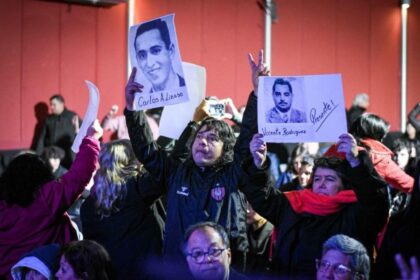
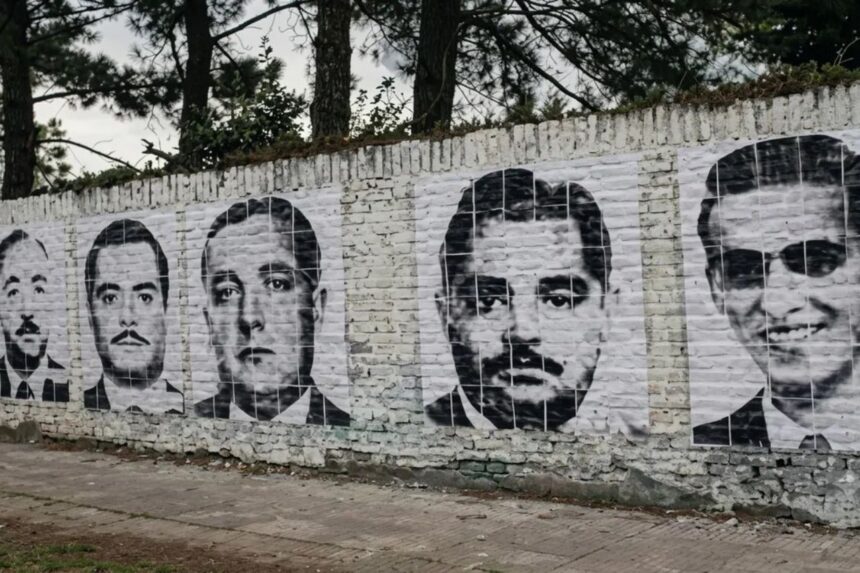
Carlos Lizaso, Nicolás Carranza, Francisco Garibotti, Vicente Rodríguez and Mario Brión died on the José León Suárez landfill.
The trial
Livraga filed a criminal complaint in the months following the shooting, which left him with severe injuries to his face and arm. The case reached the Supreme Court in 1957 but was ultimately referred to a military tribunal on the grounds that the police had acted within a military operation.
It would not be revisited for nearly seven decades.
Shortly afterward, Livraga went into exile in the United States, where he has lived ever since. Now 94, he is not in good enough health to testify and will not take part in the proceedings.
He has, however, submitted a written account of what he experienced between June 9 and 10, 1956. The court will also screen a video interview recorded during his last visit to Argentina three years ago, in which he recounts the events.
The hearings, meanwhile, will be livestreamed on YouTube.
Although the trial will begin just days after the 70th anniversary of the massacre, the timing is coincidental. According to a court staff member who spoke to the Herald, the proceedings were scheduled after investigators finished gathering evidence, including witness testimony from relatives of the victims and historical documentation.
Following an investigation launched in 2022, Judge Vence concluded earlier this year that the case warranted a truth trial.
“The trial seeks to determine, at a judicial level, whether these events occurred, whether crimes were committed and whether the state bears responsibility for them,” the source said.
The hearings will focus on the police operation carried out on the night of June 9, 1956, the arrests that followed, and the shootings in the early hours of June 10. A central question will be whether the massacre was covered by the martial law declared that day.
Relatives of the victims, historians and other experts are expected to testify before Judge Vence.
The national government will not participate in the proceedings. Nor will there be a prosecutor.
Paul Starc, the prosecutor originally assigned to the case, opposed holding a truth trial, arguing that it was unnecessary because “historical truth needed no further certainty beyond what had already been established in books and newspapers,” according to the court source.
Starc left the case in April 2025, when President Javier Milei appointed him head of the Financial Information Unit. He was removed from that position in January.
Truth trials
Truth trials became common in Argentina in the 1990s as a way of investigating crimes committed during the 1976–1983 dictatorship while amnesty laws still shielded perpetrators from prosecution.
Those laws were later struck down, allowing criminal trials against surviving perpetrators to move forward.
More recently, a truth trial was held in 2022 to examine the 1924 Napalpí Massacre. The court concluded that the Argentine state was responsible for the killing of hundreds of Indigenous workers in Chaco at the hands of police forces.
A similar finding could emerge from the José León Suárez proceedings.