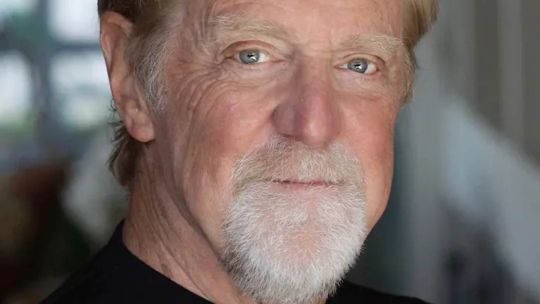
According to Jonathan Taplin, we live in a dangerous age where a very small group of tech oligarchs hold an increasingly larger portion of the wealth and the political power.
Taplin – who in a varied career has gone from serving Bob Dylan’s tour manager and producing Martin Scorsese’s Mean Streets to working as a corporate media executive at Merrill Lynch and teaching at the University of Southern California as a professor – sees ominous connections between the revolutionary days of the 1960s and 70s and today.
Taplin sees an increasingly alienated, indebted and educated group of youngsters that could rebel if things stay the course. The Silicon Valley elite is in great part responsible, in his view, for the apocalyptic projection that machines will take over our jobs and lives. Not to mention the constant risk of a market meltdown off the back of the massive hype pushing stocks in AI firms higher and therefore the markets. Mark Zuckerberg, Elon Musk, Peter Thiel, and Marc Andreessen are his four horsemen of the developing tech apocalypse – and Taplin is here to warn us about it.
About 15 years ago, big tech and the Silicon Valley crew were seen as these goofy geniuses, disrupting the economy, generating wealth and, overall, being seen as forces for good. Today, these companies are seen as privacy invaders while the founders and CEOs have become Machiavellian super villains. What’s changed?
I’d go back further. If you think about [early Internet visionaries] Stewart Brand and [Apple’s] Steve Jobs, in the very beginning of the Internet it was very idealistic, almost hippie. A group of people who thought they could finally democratise culture. At the time in the United States, there were only three television networks, so it seemed there was monopoly control of the media. The idea was that the Internet was going to change all of that. Everybody would have a microphone. What we didn’t really realise was that the political authorities made a decision not to regulate the Internet the way they had regulated media before. They would not let the Federal Communications Commission touch it. So, the classic notion of monopoly began to take hold, based on the network effect: if you have more people on your platform, then nobody wants to go to another one.
Very quickly, Facebook and Google grew to become dominant. Pretty soon, all the advertising started to flow towards them because both could pitch a story which said, “Look, not only can we reach all these young people that are the decision-makers, we can reach them very specifically on what their tastes are because they’re leaving all these digital signals for us, we can aim advertising only at the people that are going to buy your product and it’s going to be much more efficient.”
The advertising that had been on TV for years started to flow into the digital platforms. Today, Google is the first or second-largest company by market capitalisation in the US.
Peter Thiel said something very interesting. If you’re going to build a successful company in the network era, it has to be a monopoly. And people don’t like monopolies.
Two other things happened. During the Iraq war, there was a lot of paranoia in Dick Cheney and the Bush administration that the Jihadis were using the Internet to infiltrate the US. They convinced Google and Facebook to give the National Security Administration a back door into their systems. This allowed them to spy on every American. A guy named Edward Snowden eventually revealed this. He had to go to Russia to get away from the CIA.
Now something different’s happening, which is the rise of AI.
So – as Dario Amodeo, who’s the CEO of Anthropic, said when he refused to give the [US] Defense Department permission to use Claude’s AI model for surveillance – when you walk into a public square, such as the ones here in Buenos Aires, which are beautiful, it is impossible to do anything private there. They are littered with CCTV cameras. In the past, it would’ve been impossible for someone to take in those millions of hours of video from every one of those cameras and try and find something.
With AI, you could say, “OK, here’s a face. I want you to find that face in the 150,000 hours of content that we’ve recorded in the last two days.” Not only that, you could find spoken words because there are microphones on all those cameras too. AI changes the whole nature of how surveillance could work. So Amodei said “this is dangerous.”
In the US we have the Fourth Amendment, which says nobody has the right to search you. This is essentially a way to search you without you knowing that.
The other thing that Amodei was objecting to was that AI shouldn’t be used in autonomous weapons, those in which an AI makes the decision to pull the trigger without a human involved. There’s some evidence that those 206 children in Iran that were killed in that school, that it was not somebody aiming and looking at the school and saying, okay, let’s kill them. That was a pre-assigned target by AI that was given to a missile without any visuals.
We’re at a really critical point here which is why the four or five people that control big tech now are seen as dangerous. I know that here in Argentina, Elon Musk and Thiel have been welcomed by your president and maybe he wants to use their tools for surveillance.
During these past 15 years, Silicon Valley espoused progressive values and supported Barack Obama. Today, they have switched sides, supporting Donald Trump and conservative values. What is behind this cultural change?
Let’s not assume these young men had real principles. They are all kind of libertarian from the beginning, schooled in the Ayn Rand line of thought that there is no higher reason you’re here than to make as much money as you can. If that’s your basic principle, you’re going to go with the political winds, whatever they are, and you’re going to want to be close to power because it can mess with your business.
If Trump all of a sudden decides he needs to regulate AI because of the risks it carries, the situation can change entirely. It was all about laissez-faire and the belief that there shouldn’t be regulation because that’s what Marc Andreessen, Peter Thiel, Elon Musk, and Mark Zuckerberg have pushed. In my book, The End of Reality, I explain that it’s all about their belief that they should control politics.
They didn’t always believe that. Steve Jobs was a very liberal guy, he didn’t really want to go to Washington, while Apple didn’t even have any lobbyists in DC. Now, they’re just being, you know, materialistic, realistic. They all showed up at Trump’s inauguration. Elon Musk gave him US$300 million for his campaign – that’s more than the Republican National Committee. They bet on both sides, and they will benefit, right? They already do: we’re in a war with Iran, and who’s getting a huge amount of money from the Defense Department? Peter Thiel, Mark Andreessen and Elon Musk, because they’re making the new drones to fight the Iranian drones, given we were shooting US$5-million dollar missiles at US$25,000 drones to try to stop them.
Back then, the bankers had the reputation of pulling the strings from behind the scenes, there was an infatuation with Wall Street. Now, we don’t really speak about them anymore, with the tech oligarchs taking their place. What about the 2007-2008 global financial crisis giving rise to this new elite?
[The year] 2008 showed that neo-liberalism, which was a system of no regulation, didn’t really work out very well. The banks got rid of the Glass-Steagall Act so that they could be both commercial banks and investment banks. When the crash happened they all needed gigantic bailouts.
Citigroup needed US$400 billion just to keep from going under. Now all of a sudden they have no credibility whatsoever. Some people argue that Obama’s big mistake was never punishing any of the bankers, nobody ever went to jail for that crisis.
A lot of people then ended up voting for Donald Trump in 2016 because of the idea that the insiders got out and I lost my house. Trump played on that populist theme big time, and the Democrats made a big mistake.
Democrats in the Bill Clinton era had had to go to Wall Street for money because Ronald Reagan worked hard to destroy the labour unions. Then they went to Silicon Valley. For a while, figures – like Mark Zuckerberg– were happy to give people like Obama lots of money. Then Biden came in with pro-regulation rhetoric. They sued Google, they sued Amazon, they pursued anti-trust and this got the Silicon Valley people up in arms. So they deserted the Democrats completely and went over to the Republicans.
Up until the crisis, Silicon Valley wasn’t political, but then they were pushed to the centre of the scene. Cambridge Analytica was one of the tipping points, revealing the true face of Facebook and Mark Zuckerberg, who emerged as a new sort of super-villain.
That was an extraordinarily important moment, Cambridge Analytica. The idea that you could really understand who was a movable voter just through going through their Facebook feed was powerful. I don’t think even today we really know the whole story.
Zuckerberg was initially perceived as a genius, middle-class nerd, who made it to Harvard and outsmarted the rich kids to become a billionaire. A [2010] movie about him, The Social Network, made his story well known. Then came Congressional testimonies where we saw the ugly side of the genius up close. And now, he’s wearing gold chains and hanging out with famous DJs. But in the end, he controls a lot of the communications of a huge portion of the world.
On the one hand he has the most brilliant business model in the world. He doesn’t have to manufacture anything as his users generate all the content. No distribution since users pay for their Internet service to get the product. So he can have a gross margin of 78 percent. What other business has anything close to that?
Its model is based on the fact that I can take all this content and never have to pay anything. Now that’s a unique place because the Internet got this special dispensation from Bill Clinton called Section 230 which says you can’t sue for anything that’s on their service. You can’t sue Facebook, you can’t sue X, you can’t sue Google.
Zuckerberg, the person, to me is somewhere on the spectrum. These are not very social people, and they’re running the social networks that rule the world. These are people who can’t look you in the eye directly, they have a hard time relating in general. That’s kind of unique to tech, just a kind of unique thing that allows people to want to write code. They’d much rather be spending their time with a machine, which tends to lead to a view of the world that is anti-humanist, techno-deterministic, that believes machines can rule the world. When Elon says “in 10 years, the robots and the AI will do all the work – you can work if you want, but you won’t have to, it’ll be like growing your own vegetables or going to the supermarket.”
For someone to think that that would be a great world, to me, is problematic. Epicurus, a Greek philosopher, said that to have a good life you only need three things: the company of good friends, work that gives you a sense of autonomy, and a core belief in something greater than yourself.
I don’t believe Mark Zuckerberg believes in any of those things. Maybe he has a few friends, but it’s more people who work for him. He certainly is not planning to give you a sense of autonomy in your work, he wants the machines to do it. Whether he has a core belief in a higher thing than just making money, I don’t know but I doubt it.
Elon Musk also transformed from goofy genius to supervillain, but in his case it was a voluntary decision to enter the political ring and take up the culture wars of the far-right.
Elon’s evolution is strange. He has this aura of being a genius, but let’s be clear: he didn’t invent Tesla, he bought it and fired the guy who did. Elon did not build a spaceship, he hired some very smart rocket scientists.
His businesses are purely elevated by hype more than anything else. Why is Tesla worth so many multiples times the value of Toyota, which sells 10 times as many cars as Tesla? Why is it so much more valuable for every dollar of earnings that it makes than any other company in the world? Well, I would say it’s because of Elon.
I believe the reason he bought X is so that he can hype his products. He has a group of fanboys that buy his stock and believe in him.
Now his new thing is Tesla is just going to be a robo-taxi company, and also a robot company. But none of those things are real yet. They’re just dreams. It’s like his dream of going to Mars. It’s an absurd dream.
There is no reason to go to Mars, there’s nothing there. We’ve had rovers on Mars trying to see if there was any life there, but they found nothing. Well, one reason to go to Mars is that Trump would give him US$20 trillion to do it. He makes 30 percent profit on everything he does, so that would be a lot of trillions in his pocket.
Elon told Thiel and Andreessen to get on the government payroll by being part of the military-industrial complex, as defence budgets are never cut. He’s done it for 10 years with SpaceX, which dominates the launching business for the US government. His friends started this company called Anduril, which makes drones and they’re selling thousands of them to the US government to try and catch up in Iran.
Thiel recently made a splash in Buenos Aires buying a mansion in a prime location and meeting with President Milei. He’s considered an anarcho-capitalist libertarian, and he’s also different from the rest of the tech oligarchs we’ve mentioned in that he’s more of a venture capitalist than a founder, a financier more than an entrepreneur.
The company that he has the most control over is called Palantir, and my guess is that he wants to get the Argentine government to use its services. Palantir services are used by military, particularly in the Iran war in terms of targeting. They are also involved in homeland security in the US, trying to figure out where the illegal aliens are. Palantir has a lot of tools, such as licence plate recognition, facial recognition together with many databases, most of which were given to them when Musk was running Doge.
When he was in the government, Musk took the IRS and Social Security databases and handed them over to Palantir to make a giant database of the whole country. When someone like Dario Amodei worries about using AI for surveillance, the people who want to use it are Palantir. They are in the surveillance business, and I’m pretty sure he’s trying to sell your government that they need a good internal security tool to find out who the dissidents are.
The fourth and last of your main tech oligarchs is the one who is the most mysterious to Argentines because he’s the least spoken about, venture capitalist Marc Andreessen.
Andreessen is the one who more than anybody else believes that technology can solve every problem. A lot of the anti-woke rhetoric came from Andreessen. He fancies himself a great polemicist and writes these long things which his VC firm publishes. He’s pretty convinced that anybody who wants to stop AI development is a Communist and needs to be put in jail. He thinks that there’s no problem in the future that technology can’t solve. Now, is he trying to address climate change? No. Is he trying to address inequality? No. And even more astonishing, he isn’t even trying to address the effect of AI succeeding and generating 30 million unemployed people in the US. He says it won’t happen, we will invent new jobs that we can’t imagine right now, so he dismisses the very idea that AI could actually cause problems in the society.
To my mind, there’s a binary outcome of the whole AI revolution. If it works and it’s as good as everyone says and 50 percent of white-collar workers lose their jobs in 10 years, then there’s two options. One, the government steps in with what Musk calls universal basic income, and gives everybody a dole to stay home in their pyjamas and play video games all day. Not my ideal of a great society.
If the government didn’t do that – and there’s no reason for me to believe that either Milei or Trump would embrace that idea which is kind of socialist – you could have a revolution. If you had 30 million people in the streets with no work, a lot of them very educated because they were college students that borrowed a lot of money to go to university, they’d be pissed off in the extreme.
I’m old enough to remember the last time there was the revolutionary period in the US, 1968-1969. Who were the leaders? They were pissed-off college students. Smart people who felt completely alienated from society.
The other part of the binary outcome is that AI turns out not to be what its proponents say it is, and companies that spent millions buying all this technology are not seeing a real productivity boost. So they stop buying the product. The US$100 billion that the AI companies are spending to build data centres this year alone is one of the worse investments that’s ever been made. So then you realise we spent too much building these data centres that nobody needs.
This outcome would lead to a kind of 2008-style financial crash. All of those companies’ stock would fall, the bank loans that have been given to build data centres would go bust, the private capital that’s been used to build these data centres would go belly up. It would be a disaster.
It’s a scary outcome. There’s a very smart guy named Ray Dalio who’s saying we’re going into a very potentially revolutionary period, nobody knows what the world will look like in five years. And that’s a fascinating possibility.
There have been elites at the power centres of society for centuries, but something feels different this time given the concentration of wealth and the power of the technology.
I can only speak to the US, but we had a period called the Gilded Age which happened during the 1890s where a few millionaires like JPMorgan and JD Rockefeller controlled the economy. They were complete monopolies, but these guys did not have political power.
They thought they had bought a president named McKinley, but he got murdered and in his place came vice-president Teddy Roosevelt, who turned out to be called a “class traitor.” He went and he broke up Standard Oil, suing them for anti-trust. He broke up the Northern Securities Group, which. He broke up all these companies and passed very progressive legislation. If you look at the share of wealth held by the top one percent it went down, and it continued to go down through the [Great] Depression and all that period of time.
We’ve never had a situation where you had this gigantic share of wealth, but also this level of political control. That is the nature of Trump, because he is something very different than we’ve ever had before because he scares people. The political class never confronts him because with one single social media post, he can make their life a living hell. He can stick the [digital] mob on them. He can make sure they don’t get re-nominated. He has a power of fear.
I lived through the 60s with Nixon and nobody was scared of him, and quite honestly, here in Buenos Aires, I don’t get the sense that people are scared of Milei. They may oppose him and they’re not afraid he’s going to throw them in jail or have someone come, put a hood over their head and drag them off to prison. People are not sure whether Trump would do that or not. A lot of this will be tested in the next four or five months with this election. How far will Trump go to make sure he stays in power?
The combination of extraordinary wealth and a president who will mess with the opposition big time makes them feel pretty secure. If I’m Elon Musk, I’m on team Trump, so nobody’s going to mess with me. That’s what’s different in the United States. We’ve never had that situation where the plutocracy also held all the political power and much of the cultural power.
Think about the cultural power of Trump. He got Larry Ellison to buy CBS, a big network. Buy TikTok, buy Time Warner, which included CNN. Then he’s got Rupert Murdoch, who controls Fox. Elon controls X. He’s got 60 percent of the media organs that have the biggest audience, essentially state media. We’ve never had a president that actually controlled the media. That is a brand-new thing in America.
Journalism has the power to create subjectivity, like culture, but from a professional and serious angle. Technological disruption of the media industry has diluted the quality of journalism, while on the flip side populism is using new tools to create subjectivity by speaking directly to their public. Can journalism recover?
In the US there is The New York Times. It has pretty much kept to the middle of road, with opinion from the right the left. It has a very good digital product that has a fast growing subscriber base. About 12 million to 14 million [subscribers] now. It continues to publish a paper every day. It has lots of side businesses that do really well, like games and cooking. As a financial entity it’s earning good money. It takes its task seriously and it never tries to slant a news piece towards a point of view. That’s the one example. The problem is it’s the only example. The Washington Post is totally failing. The Los Angeles Times is a mess. The Wall Street Journal is different because it’s aimed at a business audience. But as a national news outlet doing serious journalism, the only one I can point to is The New York Times, which would mean there is a space for somebody to be good and serious and get a good audience if they do both things. If they have a physical paper and a digital paper that is world class and have good reporters.
The role of social media in disseminating news, which is huge, is horrible. It’s just outrage. Facebook amplifies the most outrageous content because it’s all about the attention economy. The intention is to get people to share content and make it go viral, and it’s usually the stupidest stuff that goes viral. I’m worried about today’s generations who are coming up through college and high school. They’re not doing any serious reading. TikTok dominates media consumption for young people and you’re not getting anything very serious on TikTok.
That leads me to the following question: are social media and AI making this younger generation passive? That worries me a lot. I retired from teaching at the University of Southern California, but I have friends who still teach there who say that they regularly catch students using ChatGPT to write their essays.
If your response is “Why should I write this damn essay when I can get this AI to do it for me?”, then, are you going to learn anything? Is this part of the reason why we become kind of passive politically as well? In Aldous Huxley’s Brave New World, his vision of the future clashed with George Orwell’s who thought you’d have these storm troopers stamping on your neck and scaring you and spying on you. In Huxley’s view, we’d just give everybody drugs and really good entertainment and they won’t think about it. They won’t oppose the government because they’re just having too much fun. Maybe his vision of the future was more correct than George Orwell’s.
This conversation has focused on a US-based ecosystem, but China has emerged as a major global player. China has a leading AI company with DeepSeek, major financing capacity and a lot of engineers. Its government is also non-democratic while it has embraced capitalism, but still controls its population and controls the flow of information – a kind of midpoint between Orwell and Huxley.
China’s leading the future right now. If you think about solar power, wind power, electric vehicles, small nuclear power plants. China is where it’s all happening right now. And just because Trump doesn’t like renewables, we’ve just given up on that. Oil was going up again this morning to US$110 a barrel, so people desperately need alternative energy sources, and China is supplying them. It supplies 80 percent of the solar panels in the world. And we just opted out of the game. It’s just insane.
Do I think it’s wonderful that China monitors the Internet the way it does? No, but China at least is planning for a future that they’re pretty sure is coming.
In terms of DeepSeek, for instance, China could completely upset the apple cart in terms of the economics of AI. What if they came in with DeepSeek and said we’ll price it 50 percent cheaper than what it costs for you to go on ChatGPT? They could do that, and it would kill the rest of the business.
Quite honestly it’s going to be ‘Coke and Pepsi’ in the AI race. None of these AI models are going to be that much better than any other one. It’s going to be commodified. It’s a terrible business to be in, and that could really screw up the investment that’s being made, in the hundreds of billions of dollars a year. Just if China just decided to undercut price.