President Javier Milei’s government has reduced funding for several state agencies and departments, including the ANLIS-Malbrán Institute, the epidemiological body tasked with investigating whether hantavirus is present in Argentina.
A 2.5-trillion-peso adjustment (around US$1.7 billion) has affected spending on education, healthcare and infrastructure across almost every area of the state, marking another sweep of the ultraliberal Milei administration’s “chainsaw” austerity drive in pursuit of fiscal balance.
A more than 600-page resolution outlined the cuts was published in the Official Gazette on Monday night.
The government cut 1.162 billion pesos (around US$821,000, just over two percent of its budget) from the operating funds of the century-old Administración Nacional de Laboratorios e Institutos de Salud Dr. Carlos G. Malbrán – usually shortened to ‘ANLIS-Malbrán or simply “the Malbrán.”
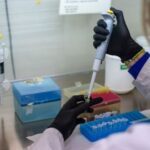
The ANLIS-Malbrán is the nation’s leading centre for disease diagnosis, research and epidemiological studies, comparable in function if not size to the Centers for Disease Control and Prevention in the United States.
News of the cutbacks “caused enormous dismay” among researchers at the ANLIS-Malbrán, said Rubén Romero, a union representative at the institution, in comments to the AFP news agency.
The institute, which falls under the Health Ministry, employs around 1,000 staff.
“It was a very heavy blow,” said the union rep.
Scientists fear the impact of the measure, particularly in technological terms.
“We are deeply concerned about this issue. We will try to urge the authorities to reflect on the need to prioritise the healthcare system,” said Romero. “We need supplies in order to work at the level we are trained for.”
The centre produces antivenoms, cancer treatments and diagnostic reagents, while also generating key information for public health policy. Its work was crucial for Argentina during the Covid-19 pandemic.
The Pan American Health Organization considers the institute “at the forefront” of research into antimicrobial resistance and a regional benchmark for infectious disease investigations.
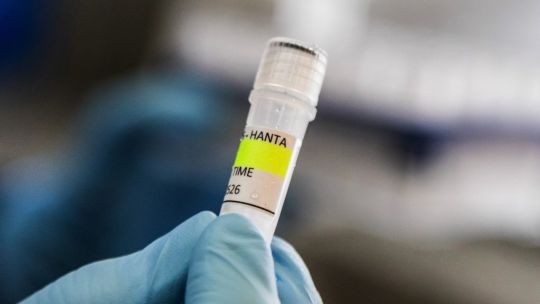
ANLIS-Malbrán specialists are expected to travel to Ushuaia in the coming days to capture and analyse rodents in order to determine whether the index case in the MV Hondius cruise ship outbreak may have contracted the virus in the city before boarding the vessel, which set sail from there on April 1.
Three passengers died from the Andes strain of hantavirus, the only strain currently known to spread between humans. Present in Argentine and Chilean Patagonia, it has not so far been identified in Tierra del Fuego Province, home to Ushuaia.
– TIMES/AFP