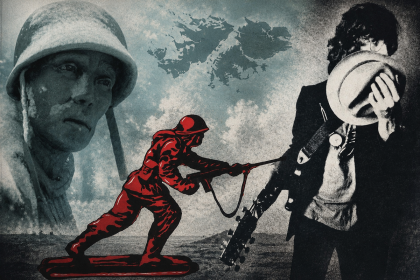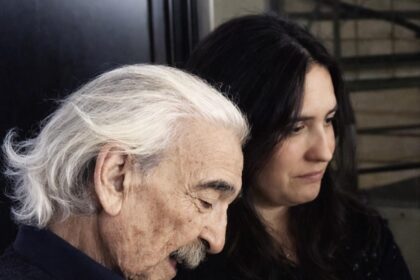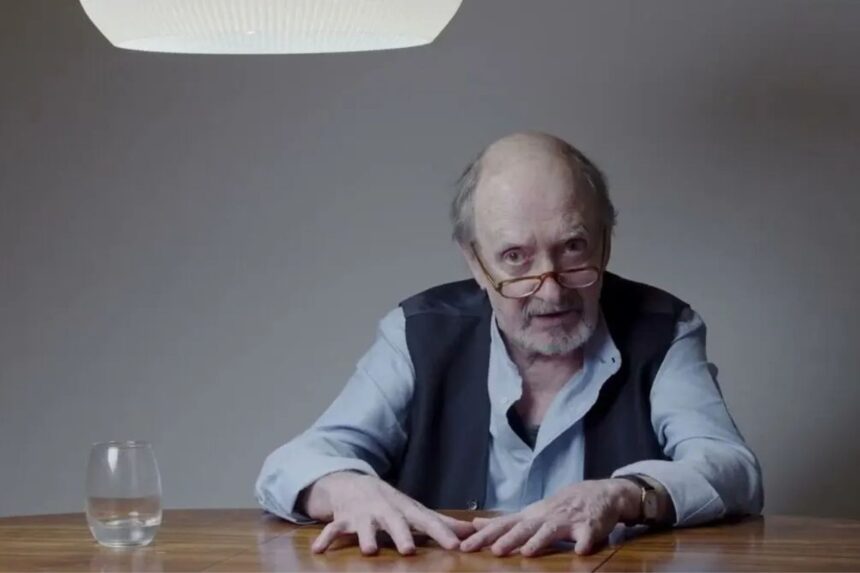
A heated online debate between Argentine filmmakers and critics sparked through the local film community last week, triggered by Juan Villegas’ dictatorship documentary Not to Kill.
The 4-hour film, which premiered in the Argentine Competition of the 27th Buenos Aires Independent Film Festival (BAFICI), features testimonies of former left-wing militants reflecting negatively on the violence of their past actions. The director also interviews living relatives of civilian victims who died in guerrilla attacks, either as targeted victims or accidental casualties.
The film sparked heated reactions on social media after its premiere, followed by a series of articles in favor of and against the film’s perspective.
Among them were texts written by filmmakers like Mariano Llinás (a co-writer of Oscar-nominated Argentina, 1985), critic and director Nicolás Prividera (M, Fatherland), and filmmaker Albertina Carri (The Blondes, The Daughters of Fire).
Critics call it a ‘boring’ and ‘naive’ film
Prividera, whose 2007 first film M dealt with the disappearance of her mother and her link with guerrilla organization Montoneros, accused the film of timely echoing the Milei administration’s denialist stand on dictatorship crimes.
The film, he wrote, “didn’t really differ” from the latest video released by the Office of the Presidency on the 50th anniversary of the coup, which promoted the perspective of a so-called “complete memory” that aims to place guerrilla crimes on the same legal level as state terrorism.
Ever since his first presidential debate in 2024, President Javier Milei challenged the military dictatorship’s court-documented existence of a systematic plan of disappearance and extermination between 1976 and 1983.
Milei has promoted the notion of a “dirty war” in which the military only committed excesses in fighting subversive armed groups.
In his article on the Ojos bien abiertos website led by Córdoba-based critic Roger Koza, Prividera blamed the film for lacking a historic perspective on the origins of armed revolutionary organizations.
He also challenged the director’s outspoken objective that the film would shed light on allegedly silenced voices. “The truth is that these stories have been made public since the very moment the events took place [while disappearances were simultaneously denied],” Prividera wrote.
Villegas, a former film critic who directed half a dozen films, responded with an article on the same website. “No one can deny that there is a public discomfort — especially within the progressive consensus surrounding the 1970s — when it comes to the testimonies of relatives of victims of guerrilla actions,” he wrote.
“The fact that these stories have appeared in national newspapers or books does not contradict the fact that they remain taboo, particularly in Argentine cinema,” he added.
Albertina Carri, former director of the Asterisco LGBTIQ film festival whose parents were disappeared by the military dictatorship, went all out against the film, citing both political and aesthetic reasons.
These included both its lack of reflection on issues like corporate complicity and the film’s extended duration, which she described as purely “boring,” as well as “elementary and naive.”
“Killing is wrong,” wrote Carri. “What’s curious is that they only seem to be discovering it now. Or rather, it’s as if these filmmakers, only now realizing that killing is wrong, want to drag the rest of us into that belated awakening,” she added.
Defenders deny the denialism charge
Mariano Llinás, spearhead of the independent production collective Pampero Cine, who also co-wrote Santiago Mitre’s upcoming Netflix film about the first Mothers of Plaza de Mayo, praised Villegas’ film for challenging the topics denialists usually use “without being denialist itself.”
In his own article, Llinás described the very existence of the film as an audacious stand within the difficulty of narrating the 1970s without either romanticizing revolutionary organizations or positions that could fuel denialist stances.
That tension, in his view, has turned characters and experiences like the ones depicted in Villegas’ film into a sort of forbidden zone for contemporary Argentine cinema, “as if they feared that the policies of Memory Truth and Justice weren’t able to deal with its gray or conflictive areas.”
That boundary, wrote Llinás, was “precisely what Villegas’ film managed to cross”.
“It barely — maybe — aims to prove that such a film is possible,” Llinás stated, and said that since the premiere of the film, Argentine cinema is “freer, braver, and better”.
Hernán Iglesias Illia, a former communications official in President Mauricio Macri’s administration, also defended the film in online magazine Seúl, where Villegas regularly writes.
“The film tells us that we can listen to the pain of these people — sons, daughters, or siblings of those killed by violent organizations — without putting at risk the consensus surrounding state terrorism or the principles of memory, truth, and justice,” he wrote.
He also dismissed the idea that the timing of the film’s premiere boosts a wave of denialism by the government. “The conversations that truly matter almost always arrive at moments that seem terrible,” he wrote.
“That’s also why they matter.”