The Argentine Supreme Court of Justice declared that the government’s extraordinary appeal to halt an injunction suspending key provisions of President Milei’s labor reform was inadmissible.
The appeal, called a per saltum extraordinary motion, is a move parties can make directly before the Supreme Court in an attempt to skip lower-ranked courts that should deal with the appeal before reaching the highest instance.
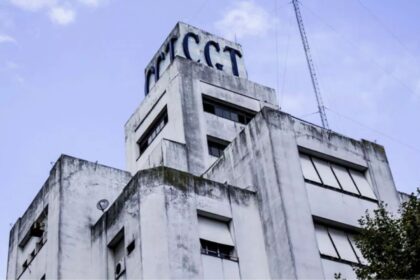
By seeking the Supreme Court’s intervention, the government’s goal was to definitively end the legal battle over the labor reform bill that the General Confederation of Labor (in Spanish, CGT) is waging.
The decision by the country’s highest court represents a setback of sorts for the government’s legal strategy, led by the Treasury Attorney General’s Office. By not granting the appeal, the CGT is still free to pursue all legal channels, despite a recent ruling dictating overturning the injunction they had obtained.
In the brief ruling issued on Thursday, the court said that the requirements “established under article 257 bis of the National Civil and Commercial Procedural Code of the Nation” that allow a per saltum have not been met.
The court’s decision means the appeal is now closed.
Timeline
The labor reform law was approved by Congress on February 26 and enacted on March 6.
The conflict began after a the CGT filed a complaint requesting the unconstitutionality and precautionary suspension of 83 articles of the labor reform. The labor federation argued that the changes violated fundamental labor rights, weakened worker protections, limited union rights, and restricted access to justice.
Labor judge Raúl Horacio Ojeda partially granted the request on March 30 and suspended enforcement of the challenged articles.
Faced with this development, the government then went directly on April 16 to the Supreme Court through a per saltum appeal. The executive branch sought an immediate suspension of the injunction and the full reinstatement of Law 27,802 while judicial proceedings continued.
Additionally, the government argued that the labor judge who issued the injunction lacked jurisdiction and claimed that the CGT did not have sufficient standing to represent all workers in the country.
The judicial situation, however, changed when, on April 23, the National Labor Appeals Court overturned Judge Ojeda’s decision to grant the CGT an injuction and sent the case to lower courts.
Although the ruling meant that the labor reform was in effect, the move proved decisive because, legally, a per saltum appeal loses its purpose once a higher court has already issued a decision — that is, once a higher instance has intervened relative to the original trial court.
Next steps
The Labor Appeals Court’s decision means that the proceedings will now continue under their purview.
By rejecting the per saltum appeal, the Supreme Court avoided direct intervention at this stage of the dispute and allowed the case to proceed through the ordinary judicial process. As a result, the legal dispute over the labor reform remains open and will continue to develop in the lower courts before any eventual final review by the Supreme Court.
Meanwhile, the labor reform is in full effect.