En todo el sector turístico, la guerra en Oriente Medio no solo está interrumpiendo los viajes a destinos afectados por el conflicto, sino que también está afectando a las rutas aéreas, elevando los costes, generando una crisis energética, modificando el comportamiento de los viajeros y ejerciendo presión sobre las empresas turísticas mucho más allá de la propia región.
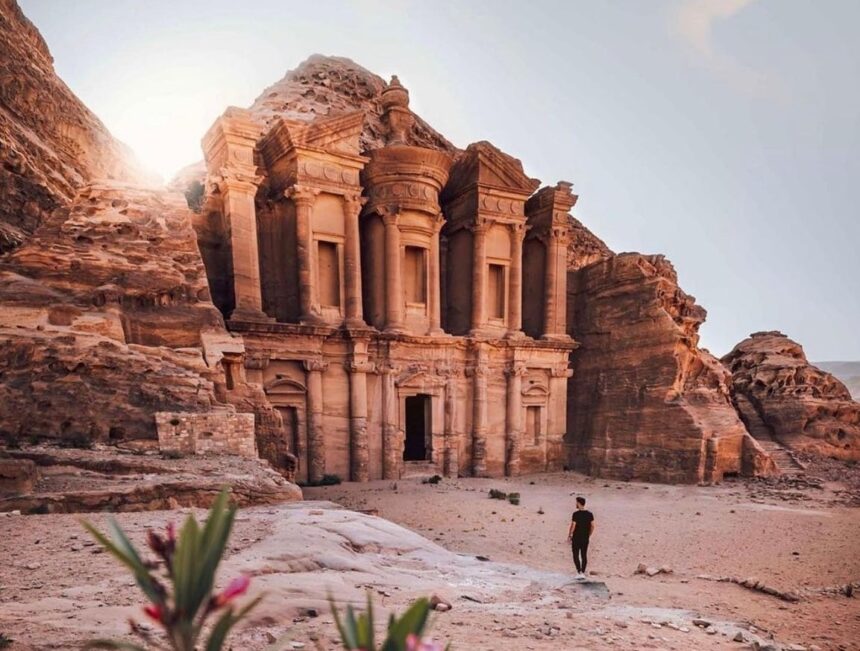
En Petra (Jordania), una de las Nuevas 7 Maravillas del Mundo, se han reportado mínimos históricos en la llegada de visitantes debido a la escalada bélica. Aunque el sitio arqueológico no ha sufrido daños directos, la interceptación de proyectiles sobre espacio aéreo jordano y la caída de restos en diversas provincias han disuadido al turismo internacional. Aerolíneas como Ryanair han cancelado rutas hacia este destino.
En el mismo sentido, el Taj Mahal (India)- una de las Nuevas 7 Maravillas del Mundo y otras maravillas de Asia, son afectadas por este conflicto bélico aunque se encuentran fuera de la zona de combate. El cierre del espacio aéreo en el corredor del Golfo obliga a las aerolíneas a tomar rutas más largas, lo que aumenta significativamente el precio de los pasajes y el tiempo de vuelo para los turistas que viajan desde Occidente.
Además, el encarecimiento del combustible debido a la tensión en el Estrecho de Ormuz ha disparado el precio de los boletos aéreos a nivel mundial.
El conflicto ha generado además una crisis de conectividad, centros de conexión clave como Dubái, Doha y Abu Dabi han sufrido interrupciones operativas y cierres parciales de espacio aéreo. Esto afecta al 14% del tráfico aéreo internacional que transita por esta zona.
Por otro parte, se produjo un desvío de la demanda, se observa un desplazamiento masivo de turistas hacia destinos considerados «seguros», principalmente en la costa mediterránea de España, Italia y Portugal, que están absorbiendo el flujo que anteriormente se dirigía al Medio Oriente y Asia.
Losses of up to 600 million dollars per day are estimated in the tourism sector due to the war in Iran
The World Council for Travel and Tourism (WTTC) calculates that the conflict with Iran is causing daily losses of up to $600 million for tourism.
A part of that impact ends up being transferred to the traveler in the form of more expensive, longer and more uncertain journeys.
Throughout the tourism sector, the war in the Middle East is not only interrupting travel to destinations affected by the conflict, but is also affecting air routes, raising costs, generating an energy crisis, modifying the behavior of travelers and putting pressure on tourism companies far beyond the region itself.
In Petra (Jordan), one of the New 7 Wonders of the World, historical lows have been reported in the arrival of visitors due to the war escalation. Although the archaeological site has not suffered direct damage, the interception of projectiles over Jordanian airspace and the fall of remains in various provinces have dissuaded international tourism. Airlines such as Ryanair have canceled routes to this destination.
In the same sense, the Taj Mahal (India) – one of the New 7 Wonders of the World and other wonders of Asia, are affected by this war conflict although they are outside the combat zone. The closure of airspace in the Gulf Corridor forces airlines to take longer routes, which significantly increases the price of tickets and flight time for tourists traveling from the West.
In addition, the increase in fuel prices due to tension in the Strait of Hormuz has skyrocketed the price of air tickets worldwide.
The conflict has also generated a connectivity crisis, key connection centers such as Dubai, Doha and Abu Dhabi have suffered operational interruptions and partial airspace closures. This affects 14% of international air traffic that passes through this area.
On the other hand, there was a diversion of demand, a massive displacement of tourists to destinations considered «safe» is observed, mainly on the Mediterranean coast of Spain, Italy and Portugal, which are absorbing the flow that was previously directed to the Middle East and Asia.